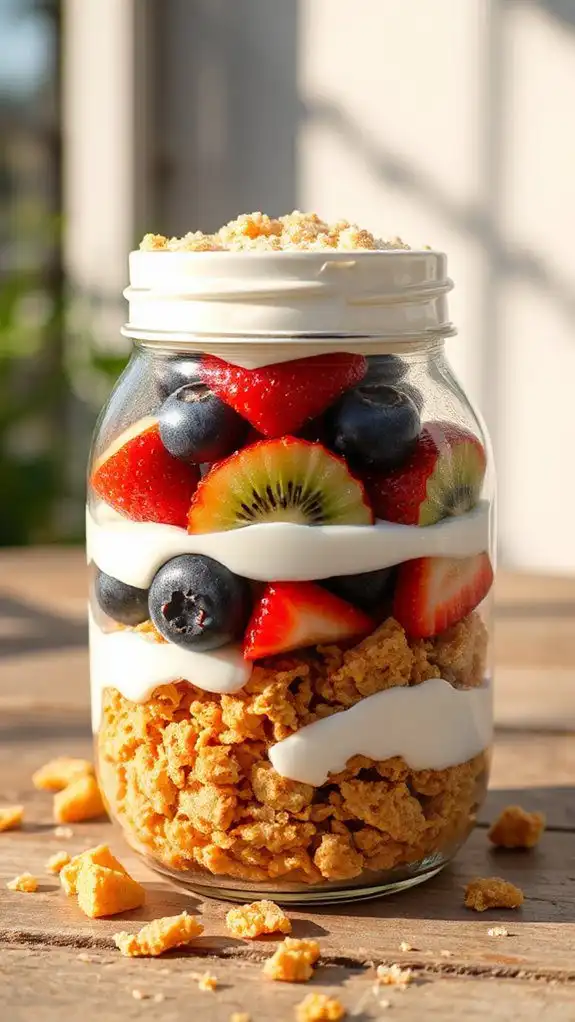
Jar Dessert Origins
The origins of jar desserts trace back to 19th-century food preservation techniques, where glass jars—pioneered by inventors like Nicolas Appert—enabled airtight sealing for extended shelf life.
Historical Origins in canning evolved into Cultural Evolution, as European households adapted jars for layered confections, blending flavors like fruits and creams in technical innovations that preserved taste and texture through precise layering methods.
Ideal for Picnics
Layered desserts in jars transform picnics into effortless feasts, offering sealed portability that prevents spills and maintains freshness amid outdoor elements.
For optimal Outdoor Transport, these containers utilize lightweight, shatter-resistant materials with ergonomic grips, ensuring secure handling during travel.
Picnic Safety is enhanced through airtight, BPA-free seals that block contaminants and moisture, preserving quality and minimizing spoilage risks in variable conditions.
Essential Ingredients
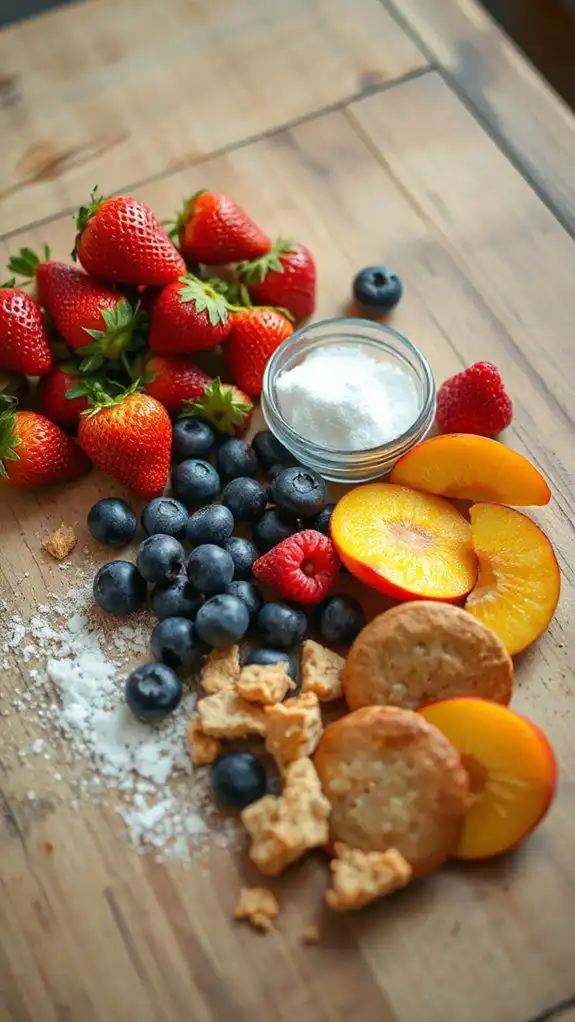
While jars facilitate seamless outdoor enjoyment, core ingredients for layered desserts demand precise selection to ensure structural integrity and flavor harmony.
For Budget Options, economical staples such as store-brand cookies and affordable seasonal fruits help maintain stable layers.
Meanwhile, Organic Choices like pesticide-free berries and unrefined sugars not only boost natural flavors but also offer health benefits, fostering a sustainable dessert experience.
Cooking Steps
Preparing layered desserts in jars demands a precise sequence of steps, where layering begins with crushing bases like cookies or biscuits to form a stable foundation, ensuring even distribution for optimal texture and structural support.
Subsequent processes demand Measurement Accuracy in ingredient ratios to balance flavors precisely, while Heat Control during melting or baking maintains ideal temperatures, preventing scorching and ensuring uniform layering integrity.
1. Prepare Jar Base
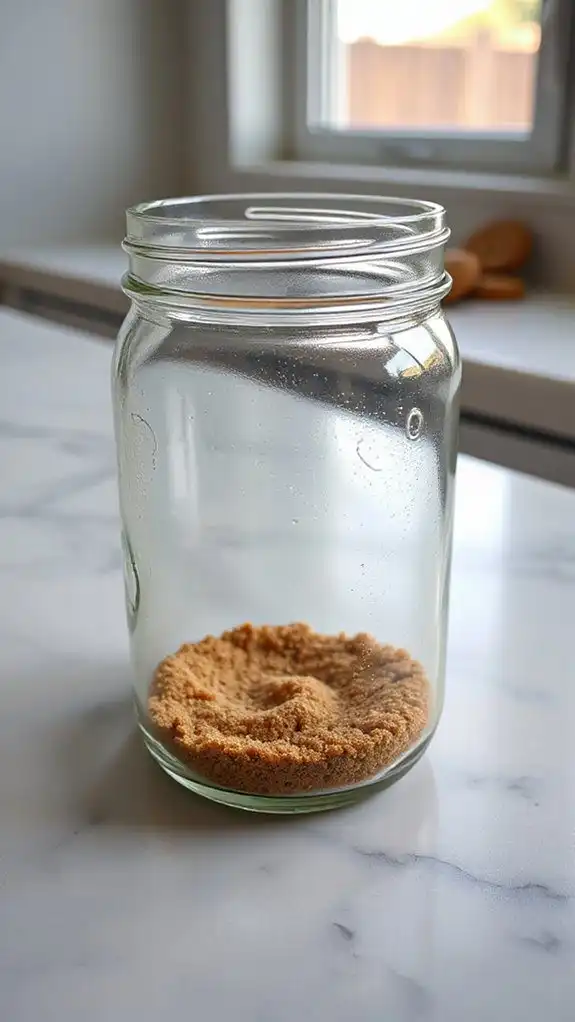
Establishing a firm foundation in the jar requires careful selection of base materials; thus, crush sturdy ingredients like cookies or biscuits into fine crumbs to create a stable, even layer that anchors subsequent components.
Opt for Eco Jars to ensure sustainability and minimize environmental impact, while preparing a clean, dry interior.
Incorporate Custom Labels to detail the base’s technical composition, adding a creative, personalized flair for precise presentation.
2. Add Fruit Layer
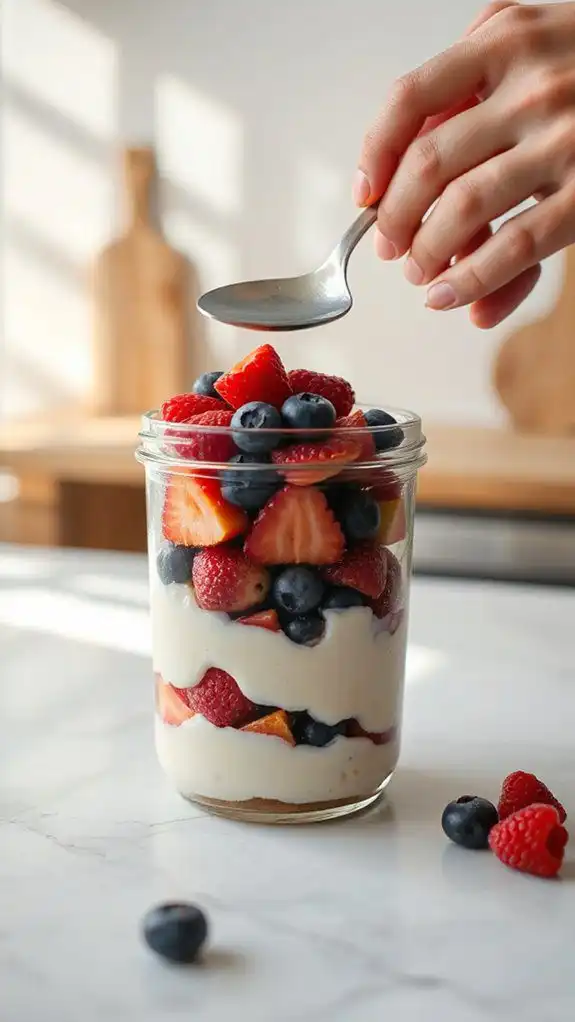
Adding a vibrant fruit layer elevates the dessert’s texture and nutrition, requiring the selection of ripe, seasonal produce like berries or citrus to achieve optimal flavor balance and moisture control.
Exploring various Fruit Varieties, such as strawberries, mangoes, or kiwis, introduces textural diversity.
Juice Infusion techniques involve macerating fruits in their own juices to intensify natural flavors and precisely regulate moisture, ensuring a technically cohesive layer.
3. Add Cream Layer
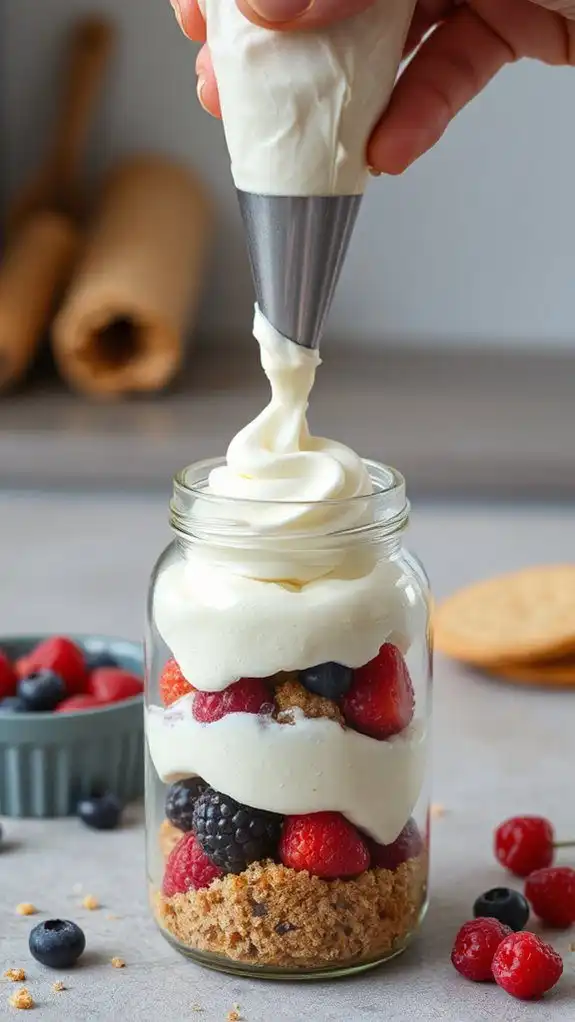
Following the cream layer’s introduction, a meticulously whipped mixture of heavy cream, stabilizers like gelatin, and flavor enhancers such as vanilla or citrus zest creates a velvety texture that balances acidity from the fruit below, ensuring structural integrity and a seamless integration within the jar’s confined space.
Flavor infusions, like herbal extracts, enhance taste profiles, while texture variations—achieved through whipping speeds—offer silky or fluffy consistencies, elevating the dessert’s sensory appeal.
4. Add Cookie Crumbs
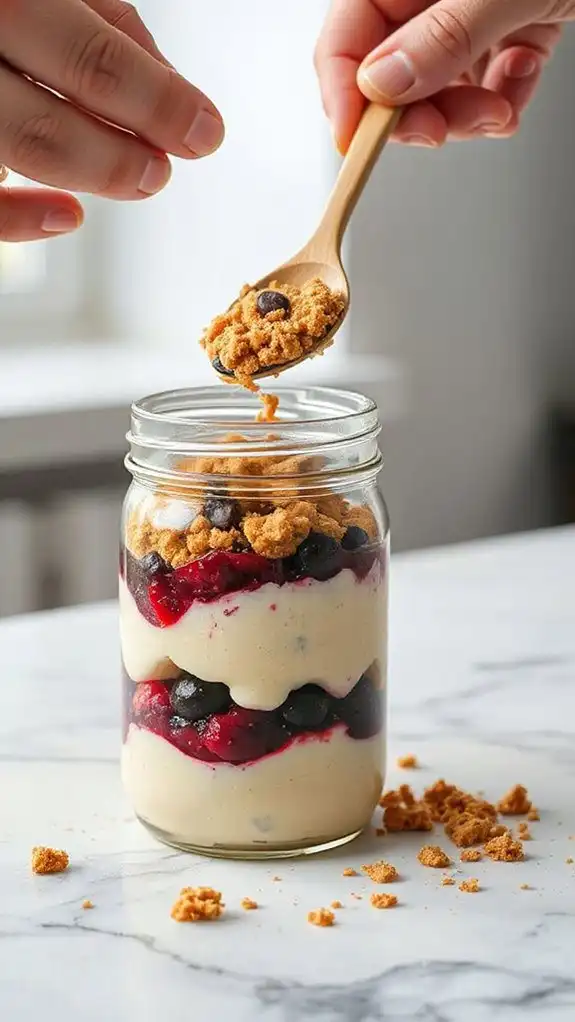
Cookie crumbs, derived from finely crushed biscuits or wafers, introduce a contrasting crunch that complements the cream layer’s smoothness, adding textural depth to the jarred dessert.
Crumbs Evolution has advanced from basic preparations to refined techniques, while Crumbs Trends emphasize flavored and artisanal varieties, offering technical precision that enhances layering dynamics and sensory contrast in these structured treats.
5. Seal and Chill
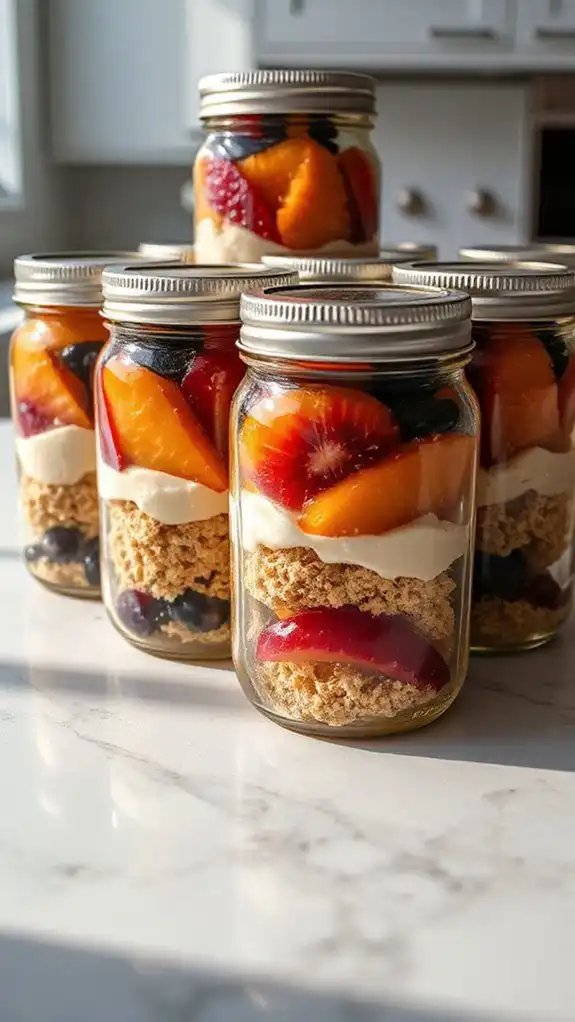
Once the layers are meticulously assembled, sealing and chilling transform the jarred dessert by creating an airtight barrier that preserves moisture and flavor, while refrigeration firms the structure and enhances textural contrasts, ensuring a stable, ready-to-serve treat that maintains its artisanal integrity for optimal enjoyment.
Employ vacuum sealing to eliminate air pockets, safeguarding against staleness and oxidation.
Rapid chilling via refrigerated environments accelerates solidification, locking in crisp layers and amplifying sensory appeal for prolonged freshness.
6. Add Chocolate Drizzle
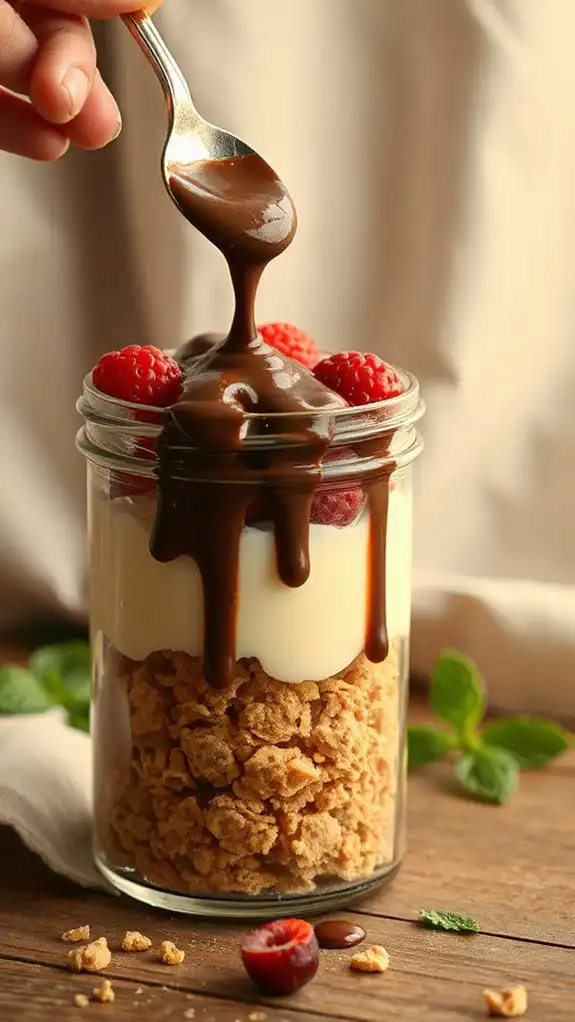
Artfully drizzling melted chocolate over the chilled layers introduces a glossy sheen and rich flavor contrast, elevating the dessert’s visual appeal and textural depth.
Crafters can innovate with Drizzle Designs, employing techniques like zigzag patterns or spiral swirls for intricate artistry.
For Chocolate Alternatives, consider dark varieties for bittersweet notes or white chocolate for creamy undertones, enhancing overall harmony.
7. Add Nut Layer
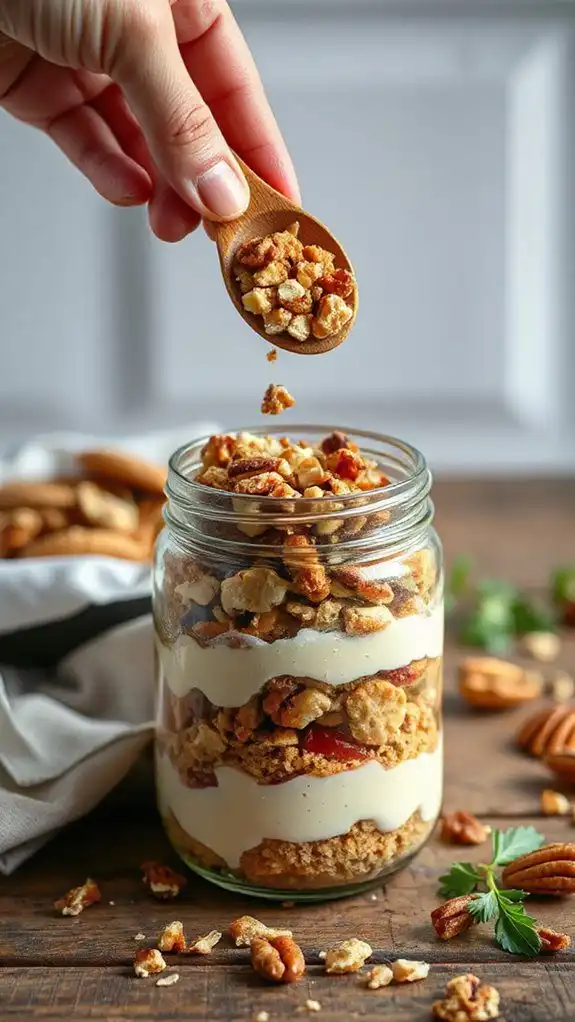
Following the chocolate drizzle, a nut layer introduces textural contrast and earthy depth to the jarred dessert.
Nut Textures provide varied sensations, from the sharp, granular crunch of toasted almonds to the soft, oily smoothness of walnuts, enhancing structural diversity.
In Nut Designs, incorporate precise patterns like concentric circles or mosaic layouts, ensuring even layering for optimal flavor distribution and technical cohesion.
Serving and Pairing Suggestions
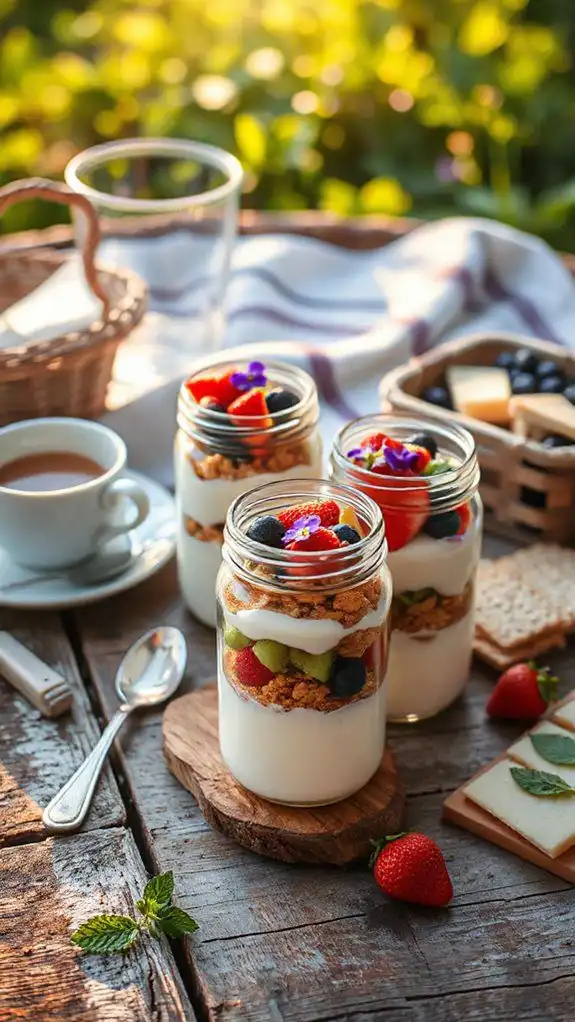
Effective serving of layered desserts in jars enhances their appeal.
With optimal techniques involving chilled storage to preserve textures.
Followed by presentation on chilled plates to maintain structural integrity.
Enhancing the experience through Wine Pairings and Seasonal Matches can be achieved as follows:
- Wine Pairings: Recommend light, fruity wines like Riesling to balance sweet layers and amplify flavors technically.
- Seasonal Matches: Incorporate fresh, seasonal ingredients, such as summer berries or winter citrus, for creative, textural harmony.
- Presentation Enhancements: Use chilled utensils and plates to keep the structure intact during serving.
Tips and Variations
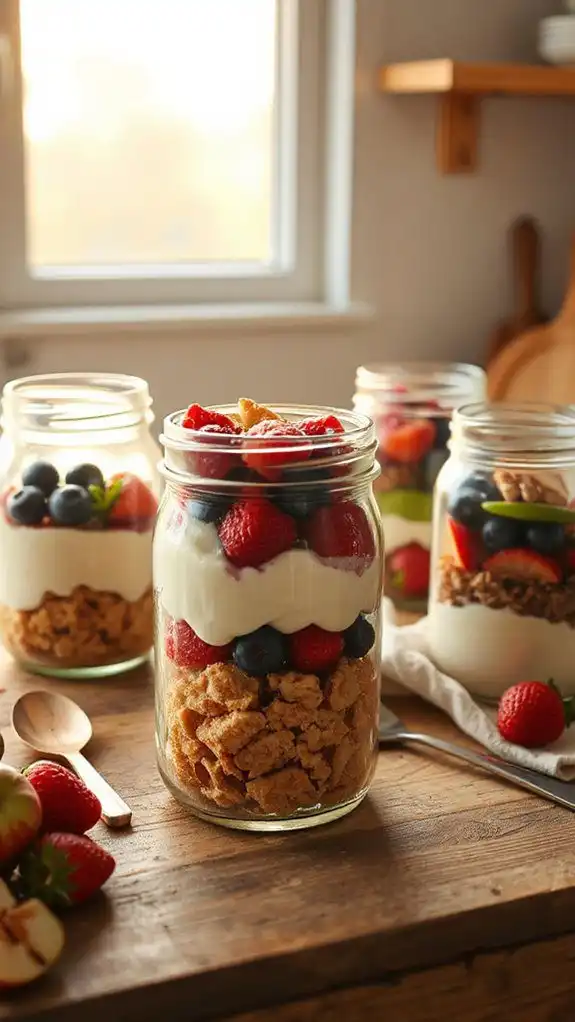
Exploring a range of tips and variations allows home cooks to innovate with layered desserts in jars, from adjusting ingredient ratios for optimal texture contrasts to incorporating alternative flavor profiles that maintain structural integrity.
Key Theming Options and Customization Tips enhance creativity.
- Theming Options: Adapt motifs like seasonal harvests for thematic cohesion and visual allure.
- Customization Tips: Fine-tune portion scales to balance flavors while preserving jar stability.
- Innovative Variations: Blend exotic elements for structural novelty without compromising integrity.
Kitchen Tools
Equipping the kitchen with appropriate tools facilitates precise layering and structural integrity in jarred desserts, building on variations explored earlier. Effective Tool Organization, such as zoning utensils for quick access and using labeled storage, streamlines workflows. Safety Tips, including non-slip grips and blade guards, prevent mishaps during preparation.
| Category | Detail |
|---|---|
| Tool Organization | Designate drawers for layering tools to enhance accessibility. |
| Safety Tips | Handle sharp instruments with protective sheaths to avoid cuts. |
| Tool Organization | Categorize by function for efficient retrieval. |
| Safety Tips | Maintain clean surfaces to minimize slip hazards. |
Essential Equipment
At the core of crafting layered desserts in jars lies a curated selection of essential equipment, designed to optimize layering precision and enhance structural stability.
To select the best tools, apply rigorous Selection Criteria, focusing on durability and precision.
For longevity, follow Maintenance Tips like proper cleaning and storage.
- Selection Criteria: Prioritize heat-resistant glass jars with secure lids for optimal visibility and sealing.
- Maintenance Tips: Clean equipment immediately after use with gentle detergents to avoid residue and extend lifespan.
- Key Equipment: Choose specialized funnels and spatulas for accurate, creative layering techniques.
Nutritional Information (Estimated, per serving)
Beyond the tools that facilitate precise layering, nutritional profiles for layered desserts in jars offer insights into their health implications, with estimates calculated per serving based on standard ingredients and portion sizes. The Calorie Breakdown reveals Health Benefits, such as sustained energy from balanced macros and fiber-rich layers, promoting satiety.
| Nutrient | Estimated Value |
|---|---|
| Calories | 250 kcal |
| Protein | 5g |
| Carbohydrates | 30g |
| Fat | 10g |
Explore Layered Jar Ideas
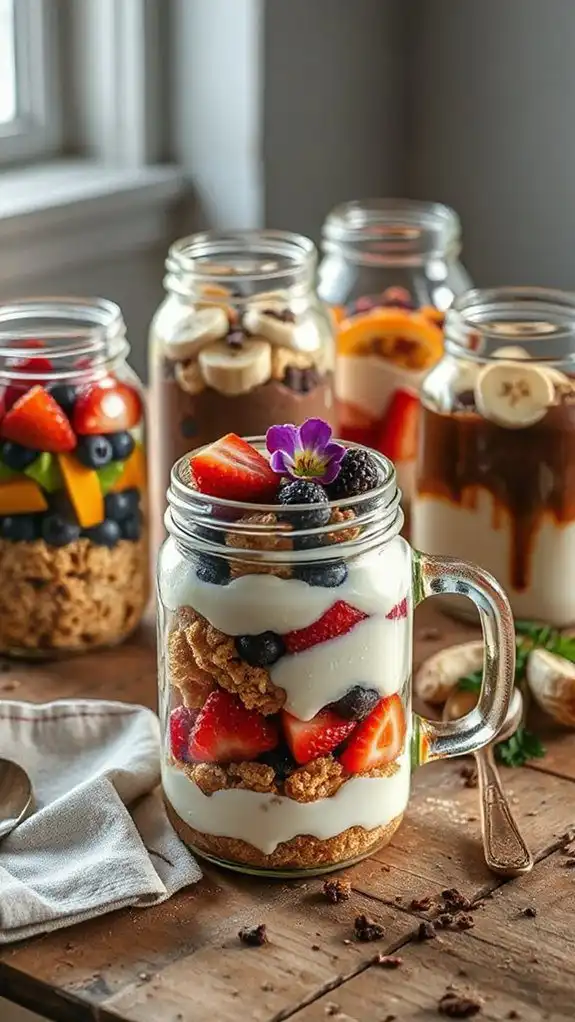
Layered jar desserts offer endless creative possibilities, blending flavors and textures with technical precision to enhance both visual appeal and nutritional balance.
In exploring Thematic Designs and Color Combinations, creators can innovate with structured layering for impact.
- Thematic Designs: Utilize motifs such as seasonal or cultural elements to craft engaging, narrative-driven desserts with technical coherence.
- Color Combinations: Employ complementary hues like reds and greens for striking contrasts, ensuring visually harmonious and technically balanced layers.
- Integration Techniques: Blend designs and colors precisely to achieve stable, textural variety without compromising form.
Troubleshooting
Even as creators master thematic designs and color combinations in layered jar desserts, instability in layers or uneven textures often surfaces, demanding precise interventions to preserve structural cohesion and sensory quality.
To enhance Layer Stability, employ gelatin or agar for optimal firmness.
Prevent Flavor Fading by adding acids and antioxidants to sustain flavors.
Implement temperature controls to uphold structural and sensory integrity.
Conclusion
As the exploration of layered desserts in jars draws to a close, their innovative fusion of visual artistry, structural precision, and sensory balance emerges as a testament to culinary ingenuity, offering creators a versatile canvas for both aesthetic delight and technical mastery.
Ultimately, in Final Thoughts, providing valuable Reader Feedback on layering techniques will enhance shared knowledge and inspire innovative future mastery.