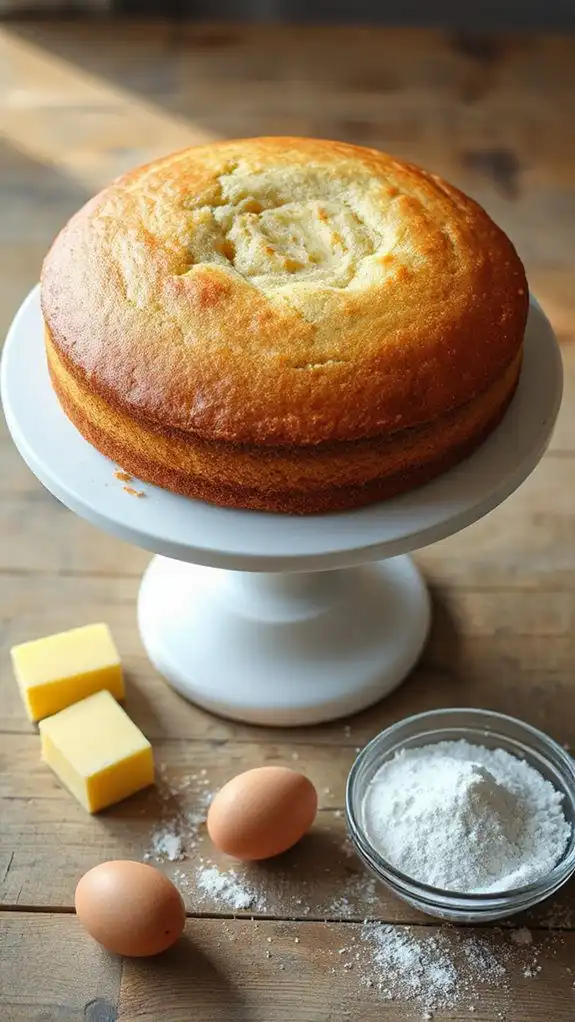
9th Century Roots
In the 18th century, butter cake originated in European baking traditions, evolving from rudimentary pound cake recipes that emphasized butter’s role as a key ingredient for achieving a dense, moist crumb through precise creaming and baking techniques.
Historical origins trace to British and French influences, where cultural evolution adapted recipes with local fats and flavors, enhancing texture and appeal across social classes.
Ideal for Beginners
Butter cake recipes, with their straightforward ingredients and methods, suit novice bakers by minimizing complexity.
Individuals adopting a beginner mindset encounter a gentle learning curve, allowing efficient mastery of foundational techniques through simplified procedures.
This technical approach reduces intimidation, enabling step-by-step skill development and error correction, fostering confidence without advanced demands.
Essential Ingredients
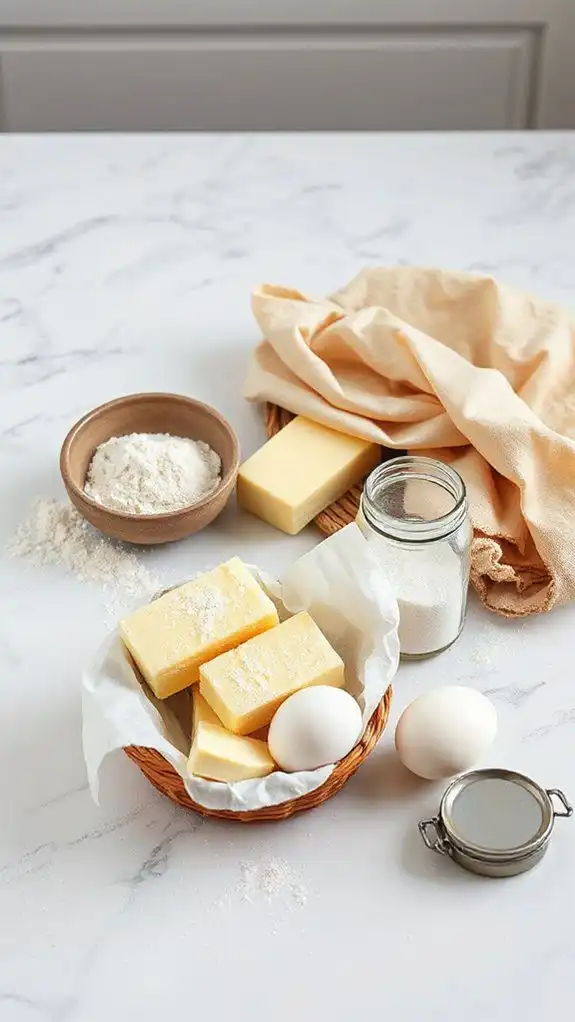
The essential ingredients for butter cake encompass flour as the structural base, butter for imparting richness and tenderness, sugar for sweetness and aeration during creaming, eggs for binding and emulsification, and leavening agents like baking powder to facilitate rise.
Ingredient alternatives include using margarine for butter or gluten-free flour.
While sourcing methods emphasize fresh, high-quality organics to ensure optimal texture and flavor.
Cooking Steps
Cooking steps for butter cake begin with creaming butter and sugar at room temperature to incorporate air and achieve a smooth, pale consistency, followed by gradual addition of eggs to form an emulsion.
Then alternating dry ingredients with liquids for even distribution and optimal batter texture.
Throughout, measuring accuracy ensures precise ingredient ratios, while oven monitoring maintains consistent heat to prevent uneven baking and achieve uniform crumb structure.
1. Preheat Oven
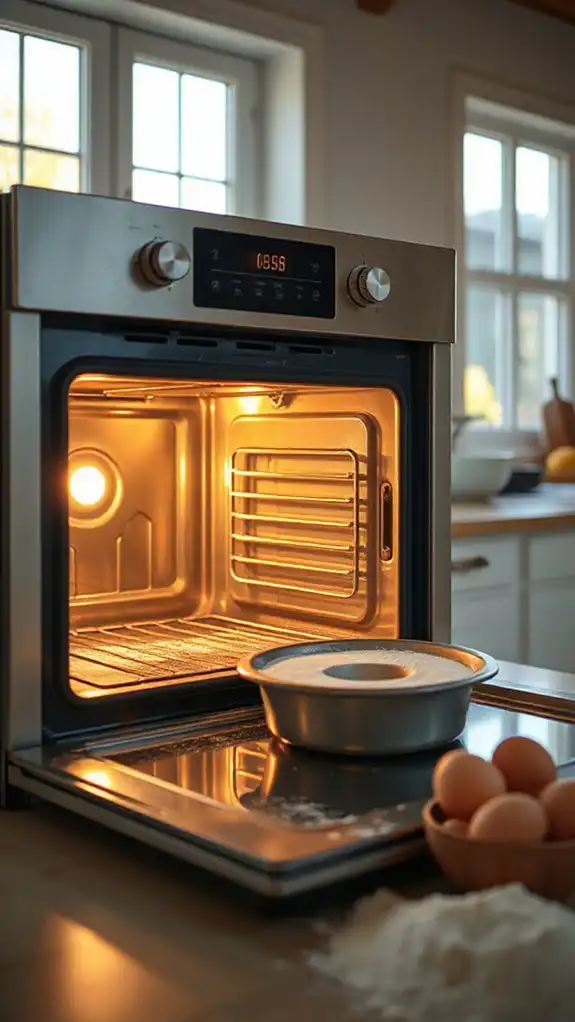
Preheating the oven to the specified temperature, typically 350°F (175°C) for butter cake, ensures uniform heat distribution and optimal rise by activating leavening agents immediately upon insertion, thus preventing structural collapse and promoting an even crumb.
Incorporating oven safety measures, like checking for gas leaks, protects users.
Energy efficiency is promoted by preheating exactly to 350°F, minimizing energy waste and environmental impact.
2. Fold in Flour
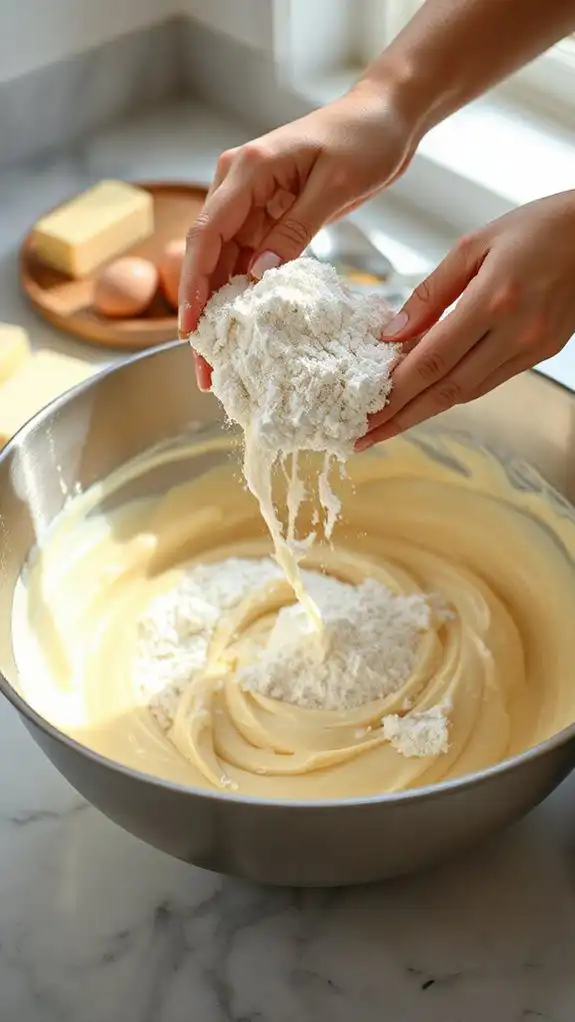
Folding flour into the batter requires a gentle, lifting motion with a spatula to integrate dry ingredients without disrupting incorporated air, thereby minimizing gluten development and preserving the cake’s light, even texture.
In folding history, this essential technique evolved to maintain batter volume.
Flour science indicates that flour’s protein network, when improperly handled, results in toughness, emphasizing gentle mixing for optimal results.
3. Add Eggs to Mixture
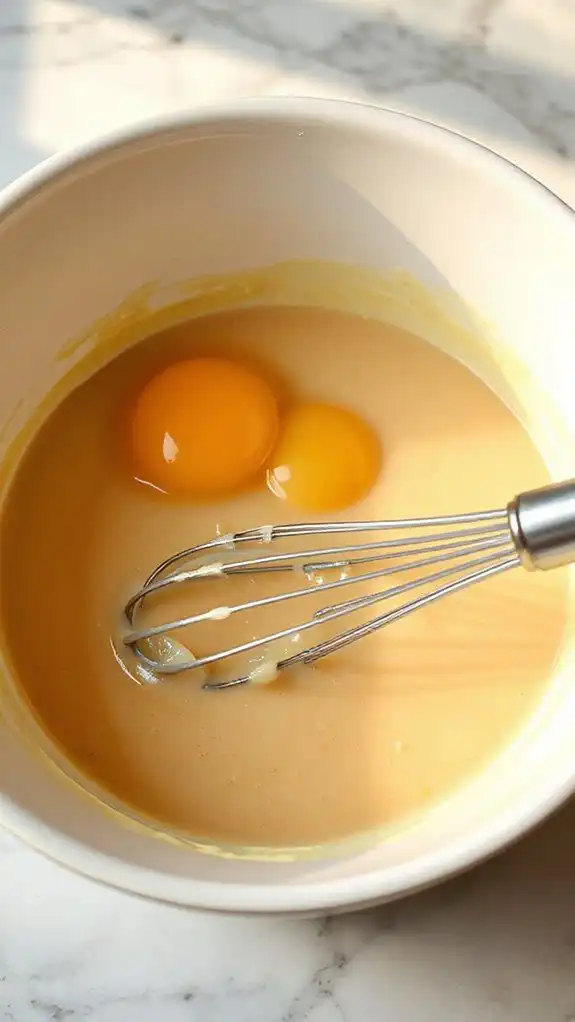
Adding eggs to the mixture involves incorporating them one at a time to promote even emulsification and prevent curdling.
Egg sourcing from fresh, high-quality sources ensures optimal protein structure for binding.
In cultural uses, eggs enhance butter cake’s texture across traditions, such as European teatime treats or American classics, providing aeration and moisture while avoiding over-mixing pitfalls.
4. Grease Baking Pan
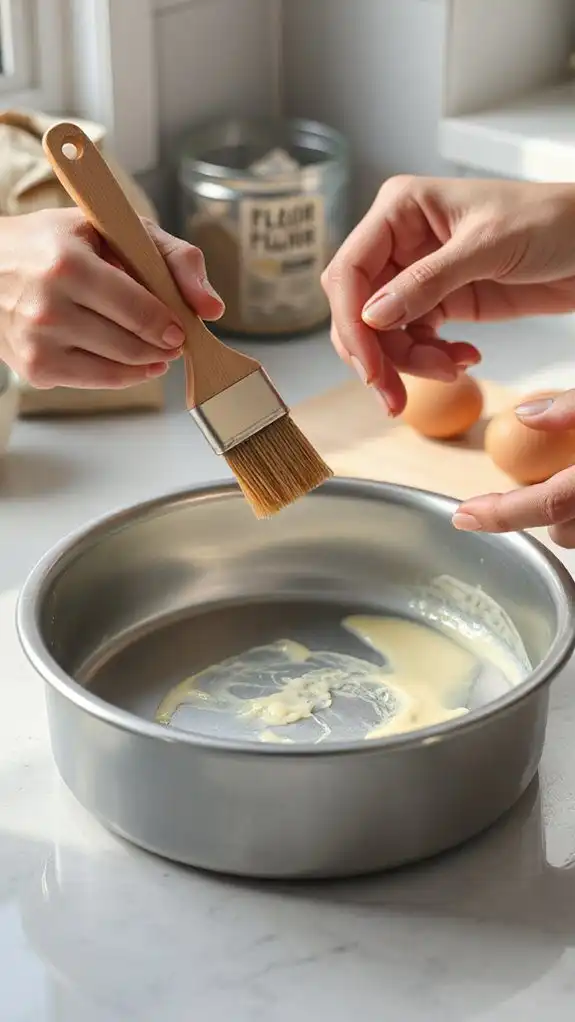
Greasing the baking pan ensures the butter cake releases cleanly after baking, minimizing surface damage and preserving its structure.
Sustainable greasing employs reusable silicone liners or beeswax coatings to reduce environmental impact.
For allergen options, select refined, nut-free oils like canola, avoiding dairy-based alternatives.
This technique ensures uniform adhesion prevention, enhancing cake integrity without compromising safety or ecology.
5. Pour Batter In
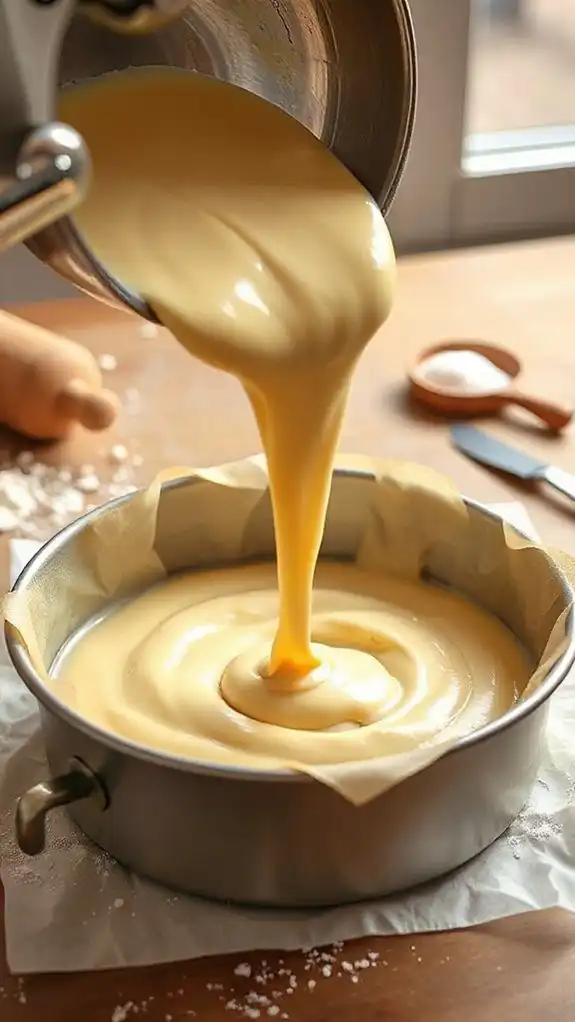
Following the preparation of the greased baking pan, the batter enters the pan through a controlled pour, ensuring even distribution across the base to promote uniform baking and reduce potential air pockets that could affect texture.
The batter’s viscosity is key for controlled flow; higher viscosity requires slower pouring.
Optimal pouring height, around 6-8 inches, minimizes air entrapment for even batter distribution.
6. Bake Until Golden
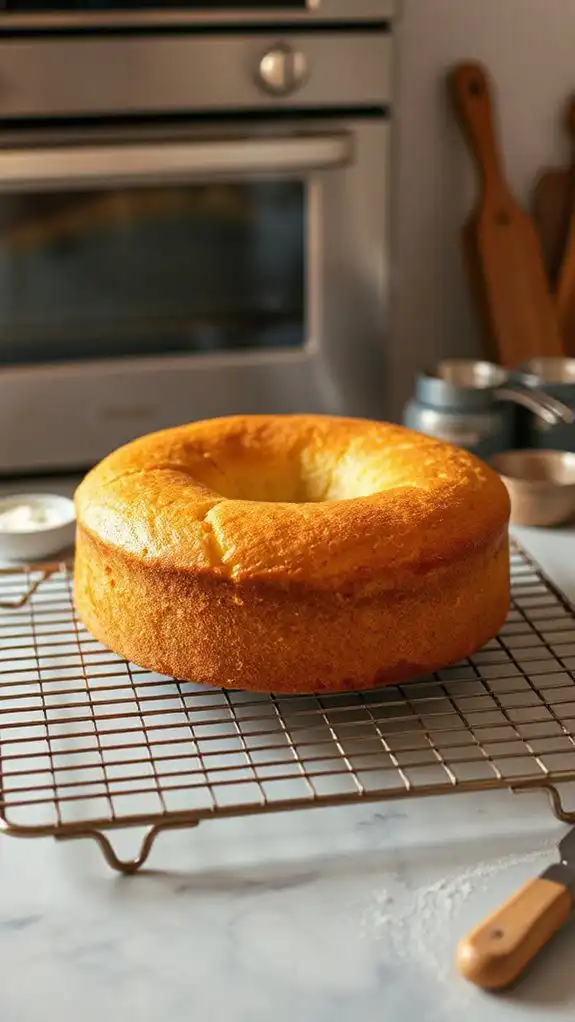
The cake undergoes baking in a preheated oven, typically at 350°F (175°C), to transform the batter into a cohesive structure through heat-driven chemical reactions.
The process promotes Maillard browning for a golden finish, enhancing sensory appeal via color and aroma.
Golden Myths, such as rapid overcooking fears, are addressed by monitoring internal temperature to 200°F, ensuring optimal texture without excess.
7. Cool on Rack
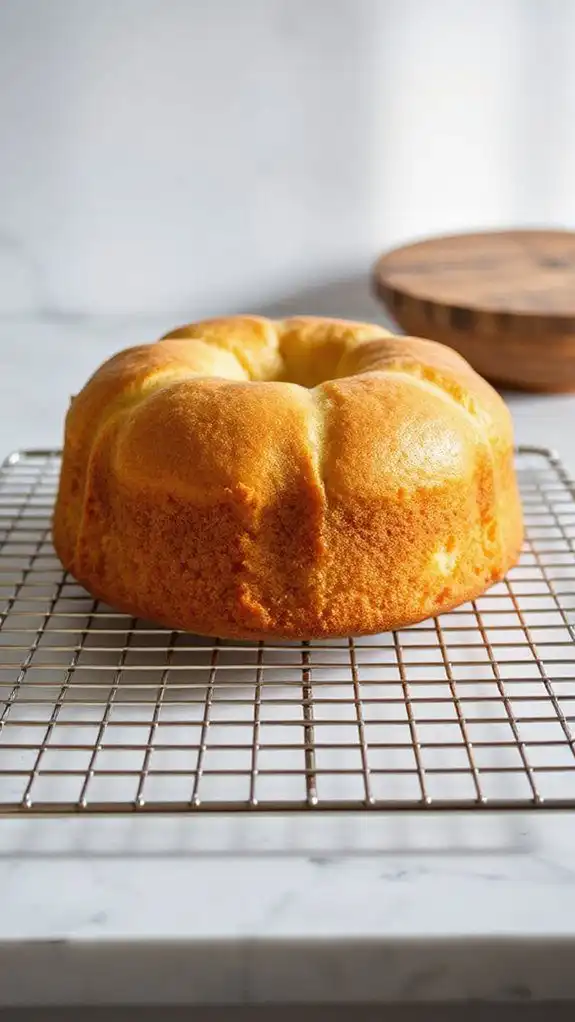
Upon removal from the oven, position the cake on a wire rack to promote uniform heat dissipation and prevent condensation buildup.
Rack ventilation facilitates optimal air circulation beneath the cake, enhancing server cooling by evenly reducing surface temperature and minimizing moisture retention.
This precise technique ensures the cake’s structure remains intact, avoiding potential textural issues through controlled thermal management.
Serving and Pairing Suggestions
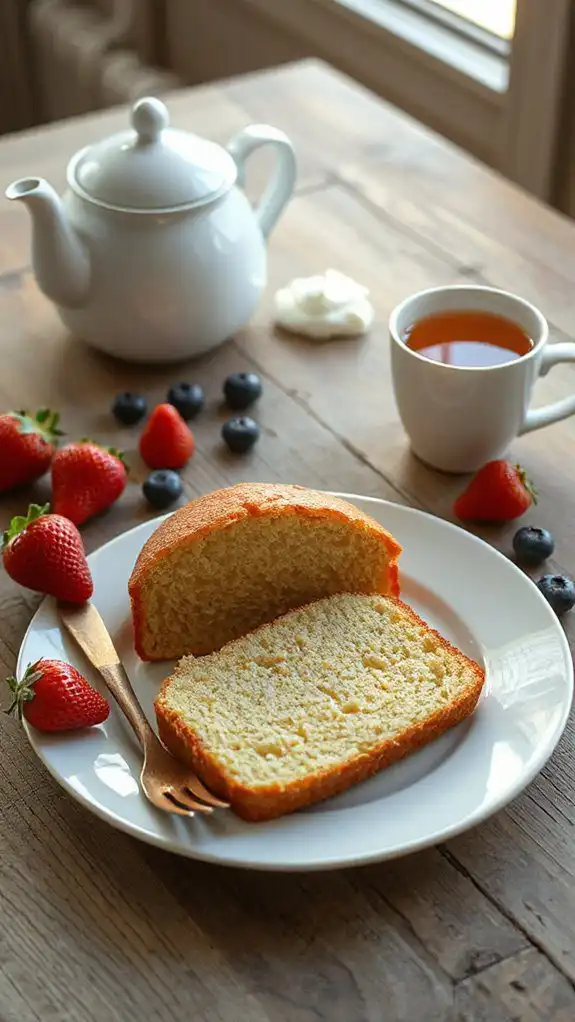
After the cake cools completely on the rack, optimal serving involves slicing at room temperature to preserve texture, typically using a serrated knife for clean cuts that minimize crumb disturbance.
This ensures integrity for effective Wine Pairings and Fruit Complements.
- Wine Pairings: Select light whites like Chardonnay to balance buttery richness.
- Fruit Complements: Incorporate fresh berries, such as strawberries, for acidity and contrast.
- Additional Pairing: Serve with herbal teas to enhance subtle flavors.
- Textural Option: Accompany with vanilla ice cream for complementary creaminess.
Tips and Variations
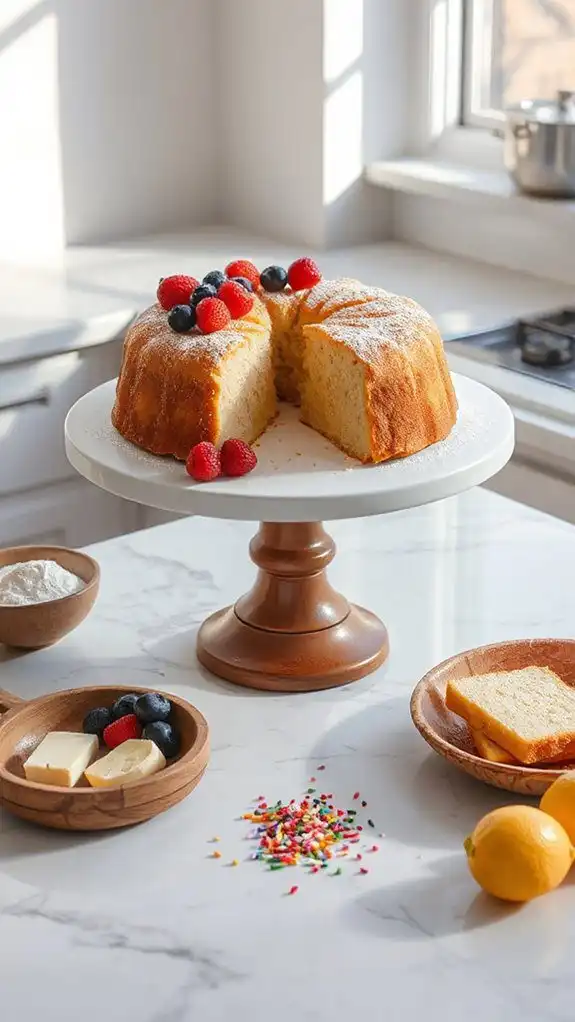
While variations of the butter cake recipe allow for customization, bakers can incorporate alternative ingredients like almond flour for a nuttier texture or reduce sugar content to 150g per cup for a less sweet profile, ensuring precise measurements maintain structural integrity during baking.
Dietary Adaptations enhance inclusivity, while Holiday Decorations add visual appeal.
- Implement gluten-free flour for Dietary Adaptations.
- Use vegan butter to accommodate restrictions.
- Apply edible glitter for Holiday Decorations.
- Incorporate nut-based toppings for festive variations.
Kitchen Tools
Essential kitchen tools facilitate the precise preparation of butter cake, ensuring accuracy and efficiency in every step. Tool maintenance requires regular cleaning and inspection to prevent residue buildup and wear, extending tool lifespan. Storage solutions, such as dedicated drawers and protective cases, shield tools from moisture and damage for optimal readiness.
| Kitchen Tool | Maintenance/Storage Solution |
|---|---|
| Mixing Bowl | Clean immediately; store in dry cabinet |
| Measuring Cups | Dry thoroughly; keep in airtight container |
| Whisk | Inspect for bends; hang on hooks |
| Baking Pan | Grease and wipe; stack with liners |
Essential Equipment
Essential equipment underpins the successful baking of butter cake by providing the necessary precision and control for processes like heating and mixing.
Equipment Maintenance ensures longevity and accuracy, while Storage Solutions optimize space and prevent contamination.
- Oven: Regular calibration and cleaning maintain even heat distribution for consistent baking results.
- Electric Mixer: Lubricate motors periodically and use sealed Storage Solutions to avoid dust accumulation.
- Baking Pans: Inspect for wear during Equipment Maintenance and store in stacked, protected containers.
- Measuring Tools: Clean after each use and employ dedicated Storage Solutions for measurement accuracy.
Nutritional Information (Estimated, per serving)
Butter cake’s nutritional profile, estimated per standard serving of approximately 100 grams, includes key macronutrients and micronutrients that contribute to its caloric content and dietary impact. Nutrient analysis indicates values for energy, fats, and proteins, while allergen profiles identify risks from dairy and eggs. This supports precise dietary evaluation.
| Nutrient/Component | Estimated Value per 100g |
|---|---|
| Calories | 350 kcal |
| Total Fat | 20 g |
| Protein | 4 g |
| Allergen Profiles | Contains dairy and eggs |
Butter Cake Variations
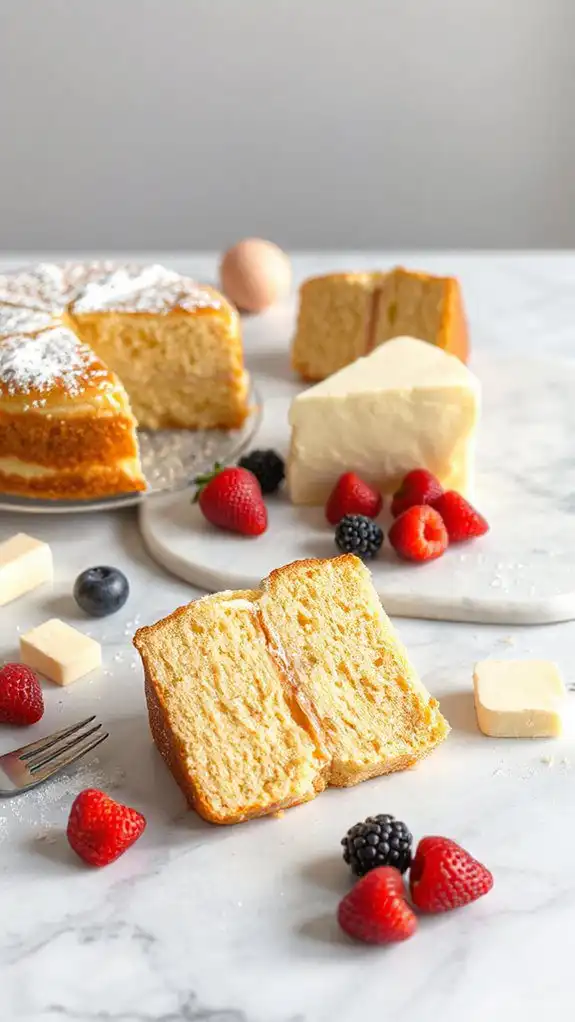
Variations of butter cake encompass modifications to core ingredients, baking techniques, and flavor profiles, enabling adaptations for dietary restrictions, regional preferences, or enhanced textures such as denser crumb structures or infused essences like citrus or nuts.
Incorporating Global Adaptations and Artistic Decorations enhances versatility.
- Global Adaptations: Incorporating local flavors for international appeal.
- Artistic Decorations: Using fondant for elaborate designs.
- Dietary adaptations: Substituting with almond flour.
- Technique enhancements: Slow baking for moister crumb.
Troubleshooting
When common issues arise in butter cake preparation, such as uneven rising or excessive dryness, pinpointing the underlying factors—ranging from ingredient ratios to oven inconsistencies—enables precise corrections for optimal results.
Analogous to Troubleshooting Cars, which involves diagnosing mechanical faults, and Troubleshooting Gadgets, requiring circuit analysis, bakers must calibrate temperatures and adjust mixing to mitigate texture defects and ensure uniform baking outcomes.
Conclusion
Effective resolution of baking inconsistencies, as outlined in troubleshooting, facilitates consistent production of butter cakes with uniform texture and optimal moisture, thereby encapsulating the core principles for achieving mastery in this baking domain.
In Final Thoughts, precise temperature regulation and ingredient ratios ensure structural integrity.
Closing Notes advocate for iterative testing to refine outcomes, fostering technical proficiency and reliable, high-quality butter cake results.