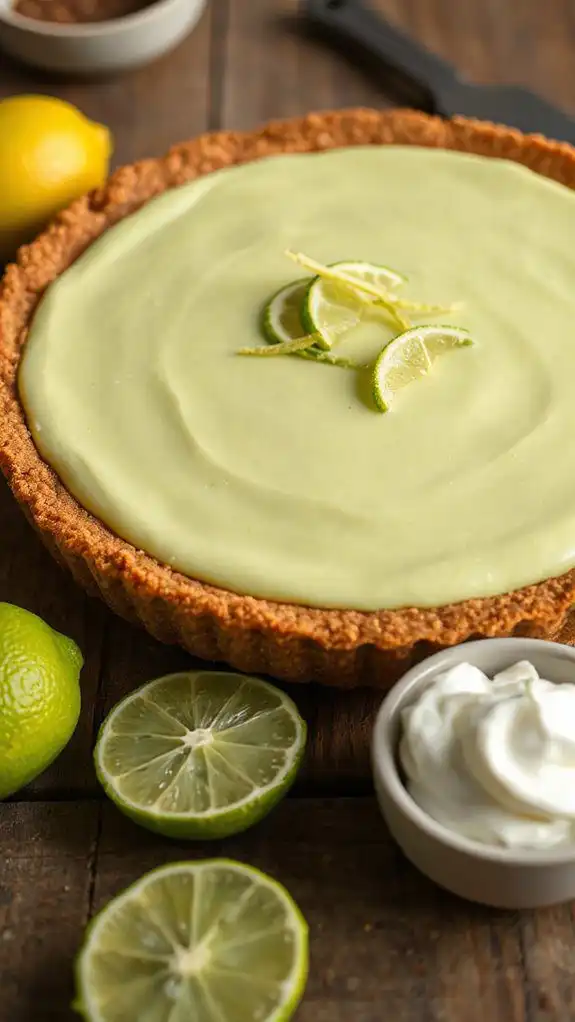
Key Lime Origins
The origins of the key lime, a small, tart citrus fruit central to the iconic Key Lime Pie, trace back to the Indo-Malayan region, where it is believed to have first grown wild.
Its Botanical History reveals a Key Discovery of cultivation spreading through trade routes to the Middle East, North Africa, and eventually the Americas, adapting to tropical climates with precision.
Dessert Lovers
Avid dessert enthusiasts often find themselves captivated by the unique allure of Key Lime Pie, a confection that balances sharp tartness with creamy sweetness in a meticulously crafted harmony.
Among Dessert Preferences, its tangy profile stands out, demanding precise technique.
Baking Challenges arise in achieving the perfect texture, as overmixing or incorrect temperatures can disrupt the delicate equilibrium of this sophisticated dessert.
Essential Ingredients
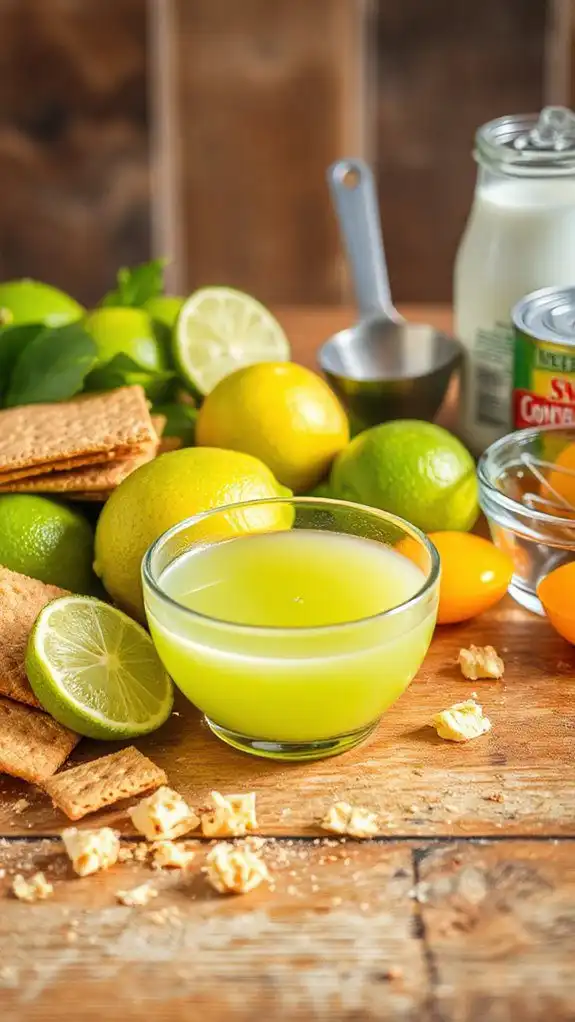
Dedicated bakers understand that crafting an impeccable Key Lime Pie hinges on selecting the right components with exacting standards. Precise ingredient ratios are critical, ensuring the balance of tartness and sweetness through measured lime juice, condensed milk, and egg yolks. Adhering to strict quality standards, only fresh, authentic Key limes and high-grade graham crackers should form the foundation of this classic dessert.
Cooking Steps
Begin the preparation of Key Lime Pie by preheating the oven to 350°F (175°C) to ensure consistent baking temperature.
Follow Safety Protocols by using oven mitts when handling hot trays to prevent burns.
Utilize Efficiency Hacks like preparing all tools and ingredients beforehand to streamline the process.
Measure ingredients precisely to maintain recipe accuracy and achieve optimal texture and flavor balance.
1. Preheat Oven Now
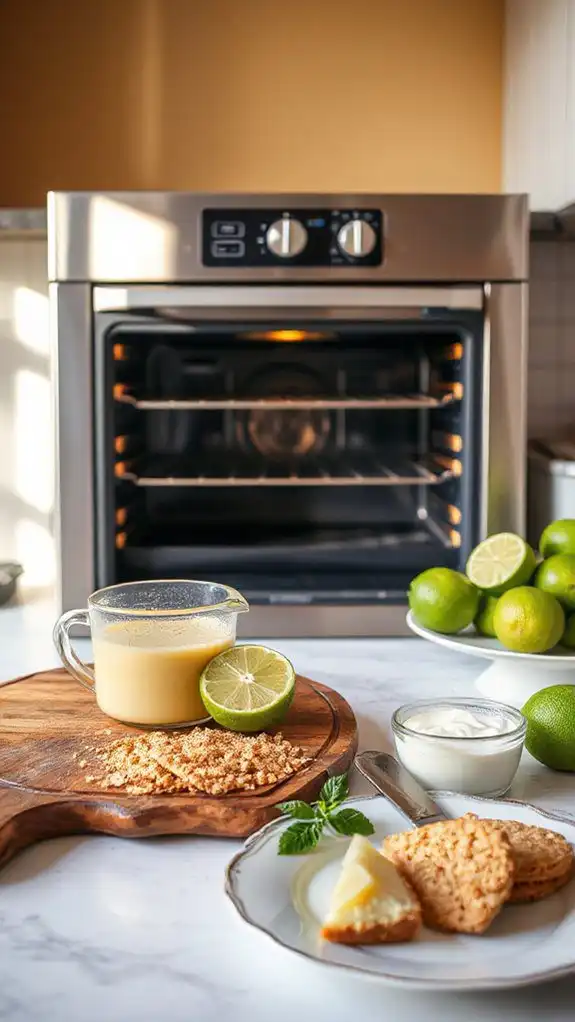
Ensure the oven is set to 350°F (175°C) to establish the correct baking environment for the Key Lime Pie.
Prioritize Oven Safety by keeping the area clear of flammable materials and ensuring proper ventilation.
For Energy Tips, preheat only when necessary to minimize power usage, and avoid opening the door frequently to maintain consistent temperature and optimize efficiency during the baking process.
2. Mix Crust Ingredients
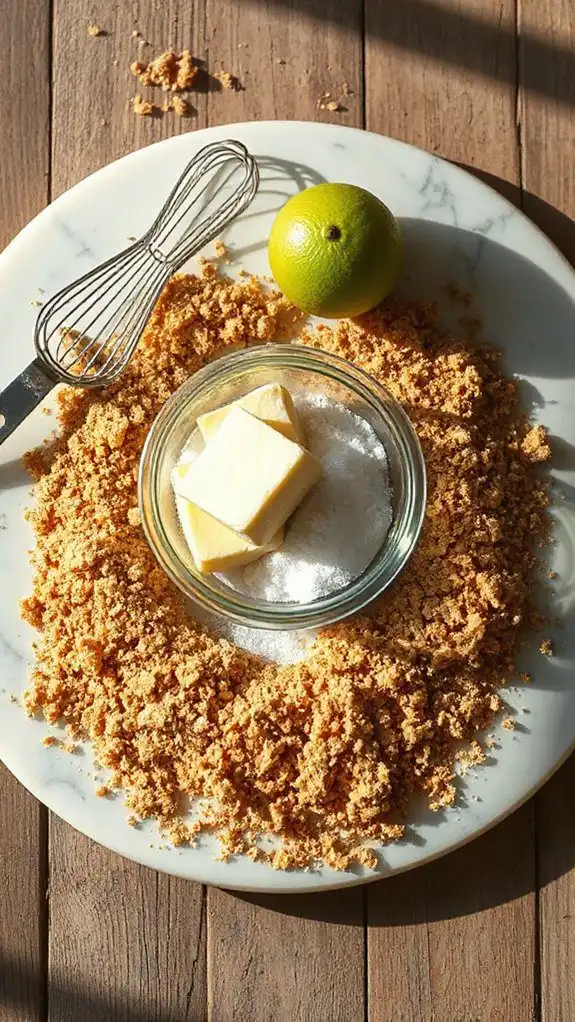
Crafting the foundation of a Key Lime Pie begins with combining the crust ingredients in a meticulous manner. Precise Mixing Techniques ensure uniformity; blend graham cracker crumbs, sugar, and melted butter using a fork or processor for consistency. For Crust Alternatives, consider crushed shortbread or gingersnaps, adjusting sweetness accordingly. This step demands attention to detail for a firm, cohesive base.
3. Prepare Lime Filling
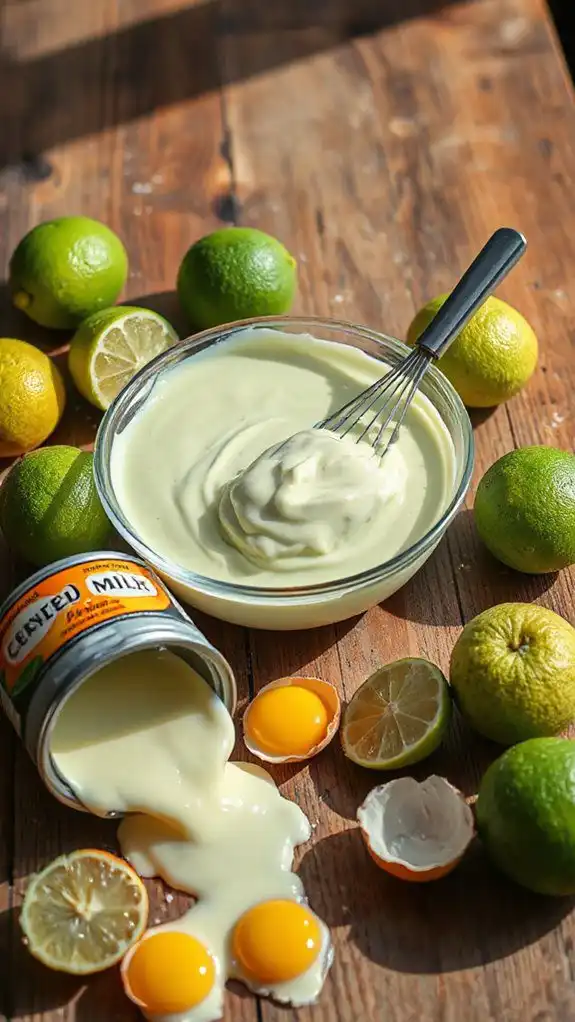
While the crust sets, attention shifts to preparing the signature lime filling for a Key Lime Pie.
The filling, made with fresh Key lime juice and sweetened condensed milk, requires precise mixing to achieve a smooth consistency.
For zest alternatives, bottled lime zest can substitute fresh.
Filling freezing is optional for a firmer texture, ensuring the pie sets perfectly before serving.
4. Bake Crust Briefly
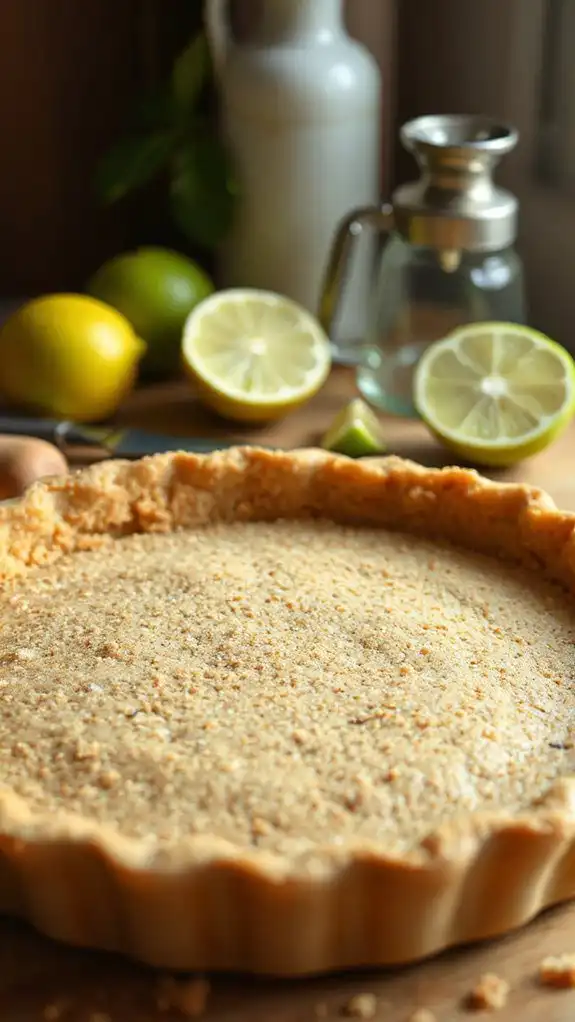
Begin the process of baking the crust by preheating the oven to 350°F (175°C) to ensure an even and consistent temperature.
Place the prepared crust on a baking sheet for stability, baking it for 8-10 minutes until lightly golden.
This brief bake optimizes energy savings by minimizing oven time and reduces health impacts from overcooking, preserving the crust’s delicate texture and integrity.
5. Add Lime Filling
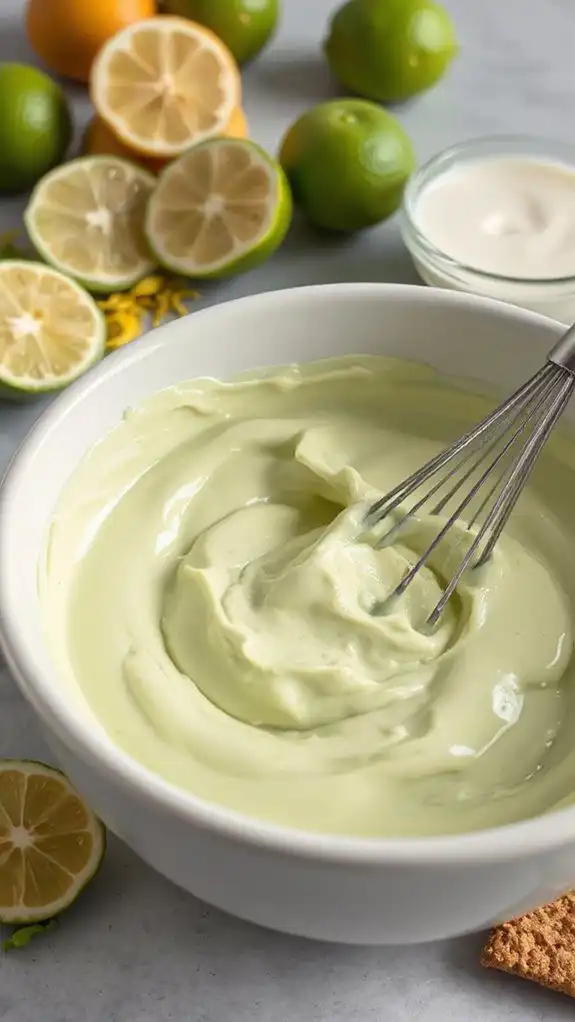
After the crust has been briefly baked to a light golden hue, attention shifts to preparing the lime filling for the Key Lime Pie.
This step embodies Filling Artistry, requiring precise blending of tart Key lime juice, sweetened condensed milk, and egg yolks.
Lime Symbolism emerges in the vibrant, zesty mixture, representing refreshment and vitality, meticulously poured into the pre-baked crust for baking.
6. Cool Pie Completely
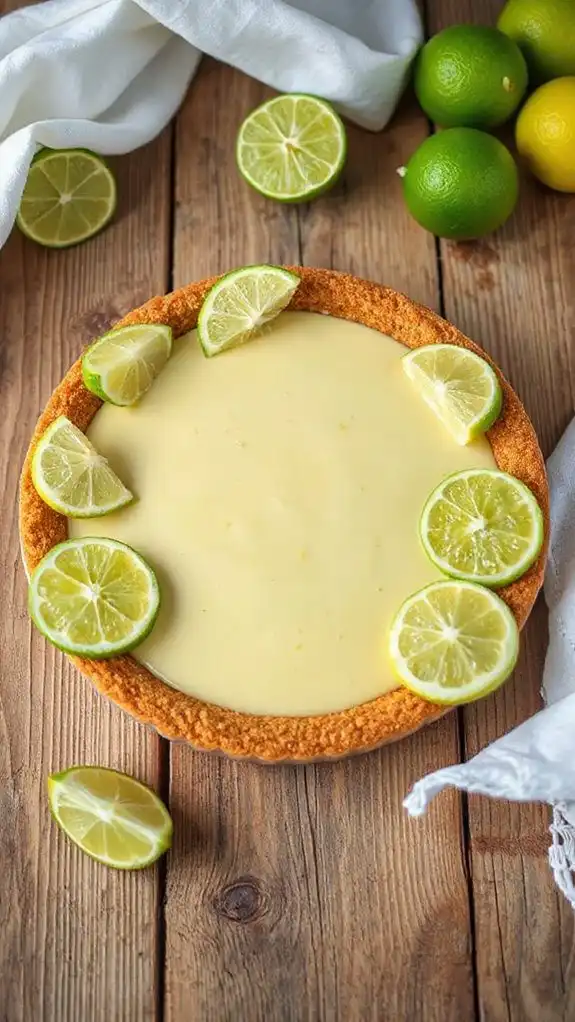
Allow the Key Lime Pie to cool completely after baking to ensure proper setting of the filling.
This critical step facilitates Texture Evolution, as the custard firms into a smooth, creamy consistency.
Additionally, Flavor Changes occur during cooling, with the tangy lime notes mellowing and blending harmoniously with the sweetness, resulting in a balanced taste profile essential for the pie’s signature character.
7. Chill Pie Thoroughly
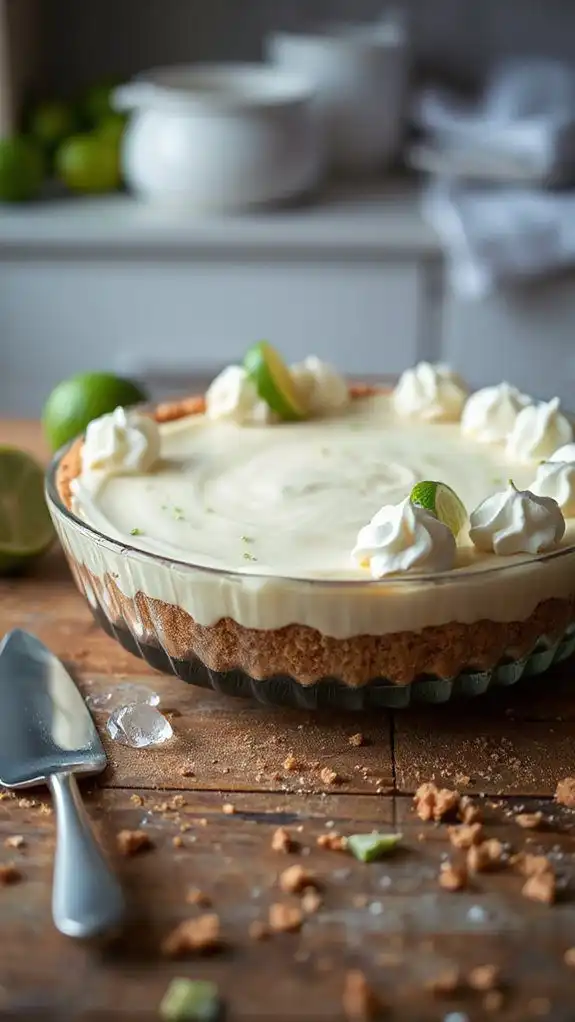
Moving from the cooling phase, the next step involves chilling the Key Lime Pie to achieve optimal texture and flavor integration.
Refrigerating at 35-40°F for 4-6 hours ensures proper setting of the custard, addressing safety concerns by inhibiting bacterial growth.
This process also promotes flavor enhancement, allowing citrus notes and sweetness to meld seamlessly into a cohesive, refreshing dessert experience.
Serving and Pairing Suggestions
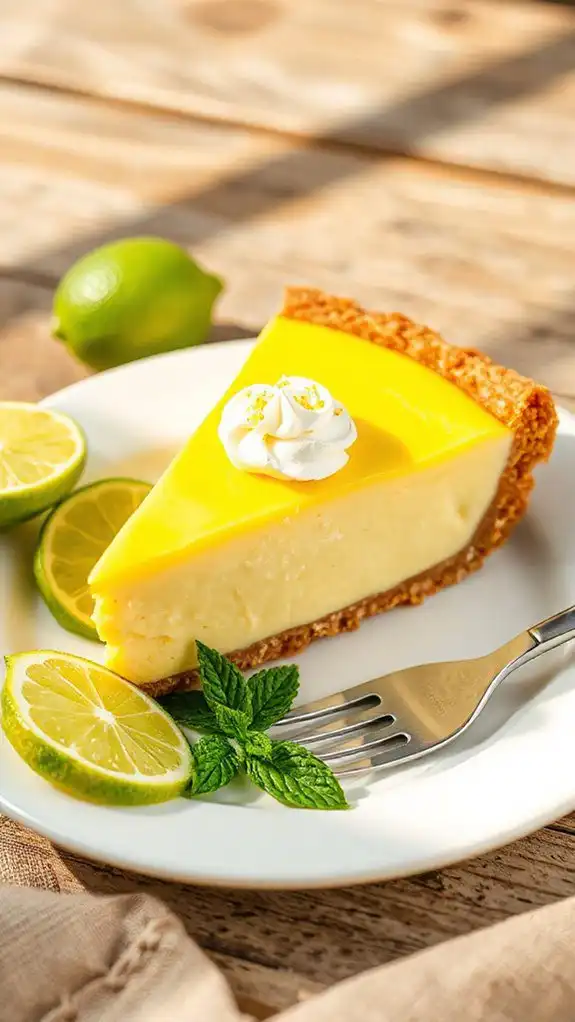
How can one best present and complement the vibrant flavors of a Key Lime Pie?
Optimal serving enhances its zesty profile through thoughtful pairings.
Consider these precise combinations:
- Wine Pairings: A crisp Sauvignon Blanc balances the pie’s acidity.
- Beverage Complements: Fresh mint-infused iced tea refreshes the palate.
- Presentation: Serve chilled on a white plate for visual contrast.
Tips and Variations
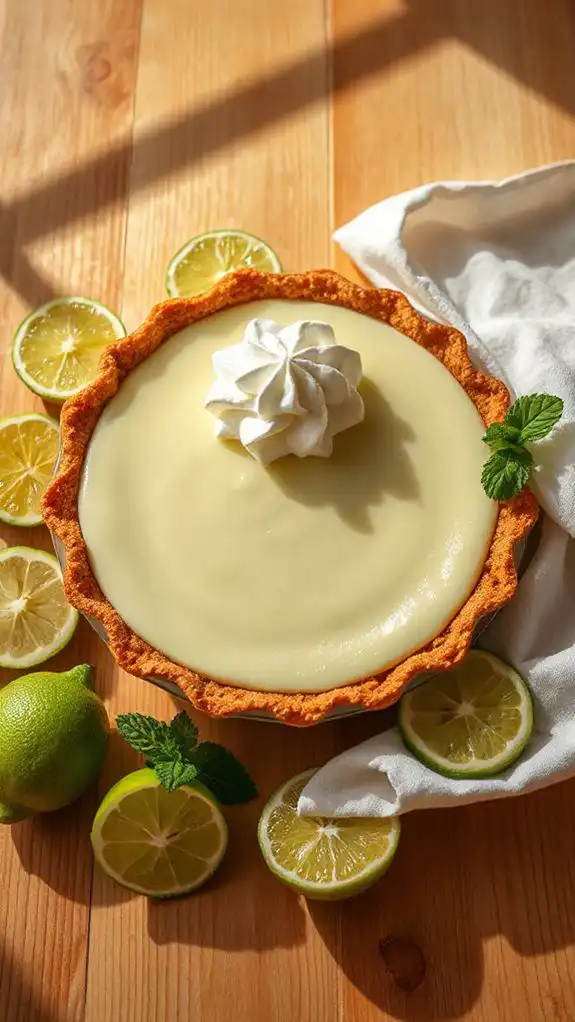
What strategies can enhance the preparation and customization of a Key Lime Pie?
Tailoring this dessert to specific preferences or dietary needs is achievable with precise adjustments.
Consider these technical approaches:
- Explore Vegan Options: Substitute condensed milk with coconut cream for a dairy-free filling.
- Craft Mini Pies: Portion into tartlet molds for individual servings.
- Adjust Tartness: Balance lime juice ratios meticulously.
Kitchen Tools
Crafting a Key Lime Pie with finesse requires not only thoughtful ingredient adjustments but also the right equipment for precision. Proper Tool Maintenance ensures longevity, while efficient Storage Solutions keep workspaces organized. Below is a detailed guide to managing tools:
| Tool | Maintenance Tip | Storage Idea |
|---|---|---|
| Mixing Bowl | Clean immediately | Stack in dry cabinet |
| Whisk | Avoid dishwasher damage | Hang on utensil rack |
| Measuring Cups | Dry thoroughly | Store in labeled drawer |
| Spatula | Inspect for wear | Keep in upright holder |
Essential Equipment
Creating a flawless Key Lime Pie demands specific equipment tailored for accuracy and efficiency in the kitchen.
Essential tools, enhanced by Equipment Upgrades, ensure precision, while Safety Protocols protect users.
Key items include:
- Digital Scale – For exact ingredient measurements.
- Citrus Juicer – Extracts juice efficiently.
- Springform Pan – Ensures easy removal without damage, maintaining pie integrity.
Nutritional Information (Estimated, per serving)
A typical serving of Key Lime Pie provides a detailed nutritional profile that is essential for dietary planning. The Calorie Breakdown reveals significant energy from fats and sugars, while Vitamin Content includes notable Vitamin C and A. Below is a concise nutritional summary per serving:
| Nutrient | Amount |
|---|---|
| Calories | 350 kcal |
| Fat | 18 g |
| Vitamin C | 10 mg |
Lemon Meringue Pie
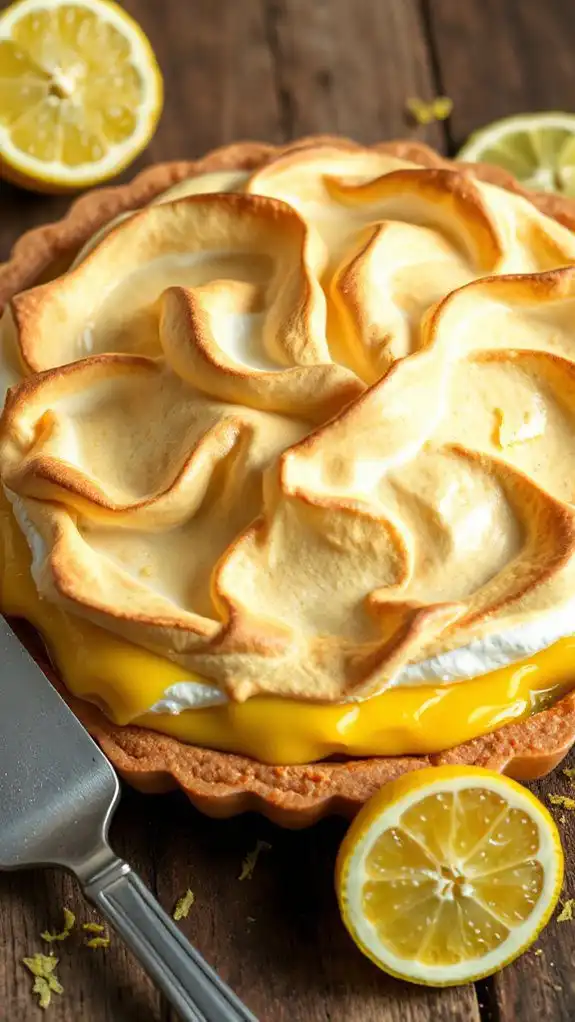
Observers will note a shift in focus from the nutritional aspects of Key Lime Pie to the distinct characteristics of Lemon Meringue Pie, a dessert renowned for its sharp citrus tang and airy topping.
Its preparation demands precision for a balanced curd and stable meringue.
Consider these elements:
- Texture: Silky filling contrasts with fluffy peaks.
- Garnish Ideas: Lemon zest or mint.
- Viral Trends: Swirled meringue designs.
Troubleshooting
How can one address the common pitfalls encountered when preparing Key Lime Pie?
One must ensure consistent oven temperatures, checking for Appliance Fixes if heating is uneven.
Additionally, verifying ingredient measurements prevents curdling.
Network Issues may arise when sourcing recipes online, so reliable connections are vital for accessing precise instructions.
Thoroughly testing equipment and resources ensures a flawless, creamy pie every time.
Conclusion
While the preparation of Key Lime Pie demands meticulous attention to detail, the reward lies in achieving a dessert with a perfect balance of tartness and sweetness.
In Final Thoughts, mastering the precise ratio of lime juice to condensed milk ensures success.
As a Debate Closure, consistency in crust texture and baking time remains paramount for an exemplary result every time.