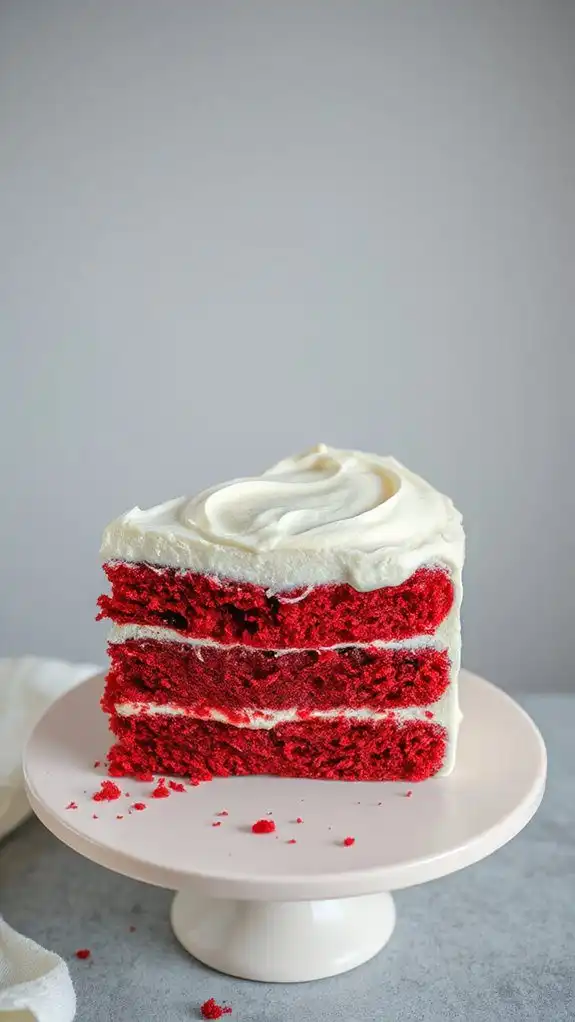
940s American Origin
The origins of Red Velvet Cake are deeply rooted in American culinary tradition, emerging in the early 20th century as a Southern innovation that blended cocoa, buttermilk, and a striking red hue to create a visually captivating and texturally rich dessert.
With wartime origins from ingredient innovations, the cake’s cultural evolution has made it a cherished American dessert, continually adapting through the years.
For Festive Occasions
From its 1940s American origins, Red Velvet Cake frequently adorns festive gatherings, where its vivid crimson layers and velvety frosting amplify the joy of holidays and milestones.
The cake aligns with various Party Themes, its red color harmonizing with Holiday Decorations to evoke warmth.
For Christmas and Valentine’s Day celebrations, it enhances visual appeal, infusing birthdays and anniversaries with creative elegance and memorable vibrancy.
Essential Ingredients
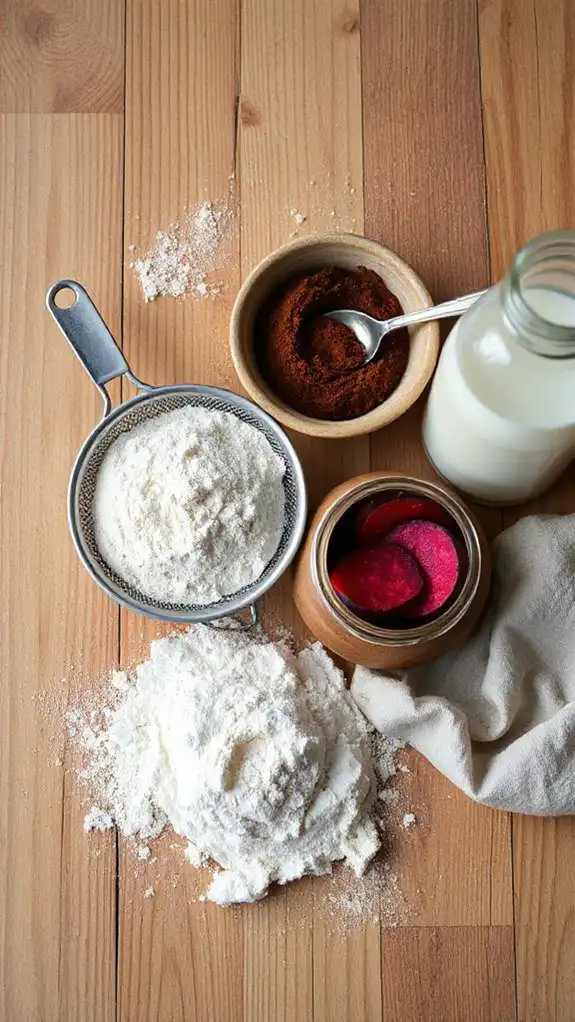
Red Velvet Cake relies on a precise combination of core ingredients that define its distinctive crimson hue and tender crumb.
Flour provides structure, while cocoa powder, with its rich Ingredient History from ancient Mesoamerican origins, adds subtle depth.
Sourcing Strategies involve selecting fresh buttermilk for tanginess and natural red dyes for vibrant color, ensuring authenticity and superior texture in this timeless dessert.
Cooking Steps
Preparing a Red Velvet Cake batter requires meticulous mixing to achieve its signature texture and color.
The process involves blending dry ingredients precisely, then incorporating wet elements through a gentle steaming method that infuses moisture and enhances the batter’s vivid red hue.
For a creative variation, a frying technique can be applied to the batter’s surface, yielding a crispy edge that contrasts the soft interior while preserving its velvety essence.
1. Preheat Oven First
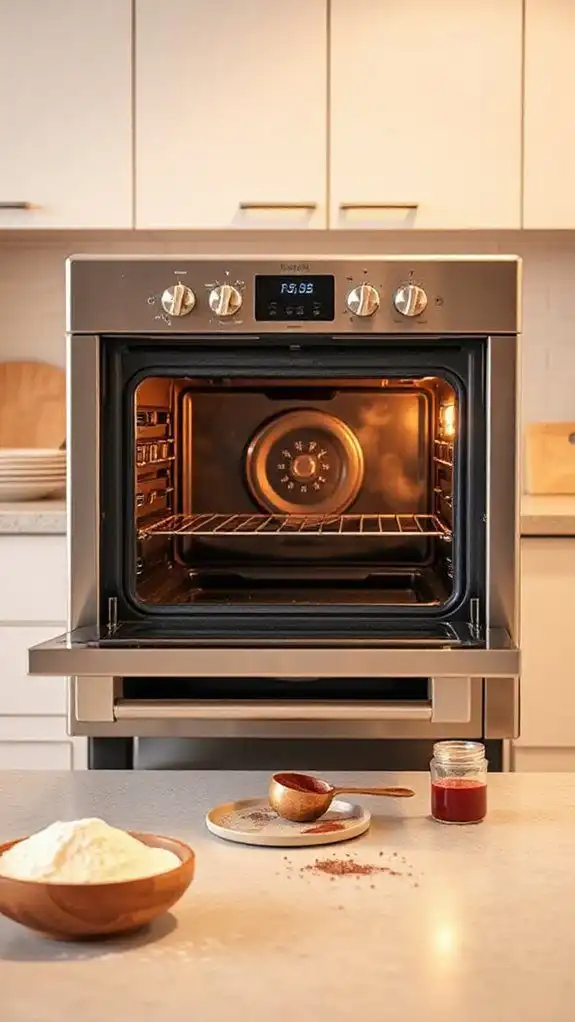
Before baking the Red Velvet Cake, preheating the oven to the specified temperature—typically 350°F (175°C)—establishes a consistent heat environment that promotes even rising and prevents uneven texture in the delicate batter.
This step demands routine oven maintenance for precise heat calibration, while enhancing energy efficiency through minimized preheat times, ensuring a creative, balanced bake that honors both tradition and sustainability.
2. Add Red Coloring
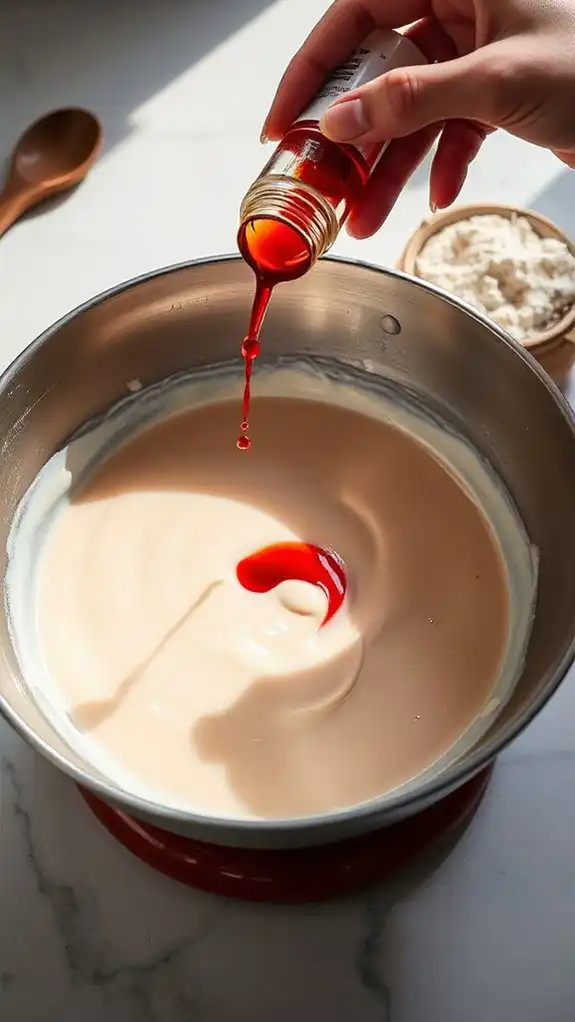
Integrating vibrant red food coloring into the batter elevates the Red Velvet Cake’s aesthetic, achieving the signature crimson hue that contrasts strikingly with its creamy layers.
When incorporating this element, bakers often explore natural alternatives like beet juice to mitigate health implications of synthetic dyes, such as potential allergies, ensuring a vivid, safe infusion that enhances the cake’s allure without artificial risks.
3. Pour Into Pans
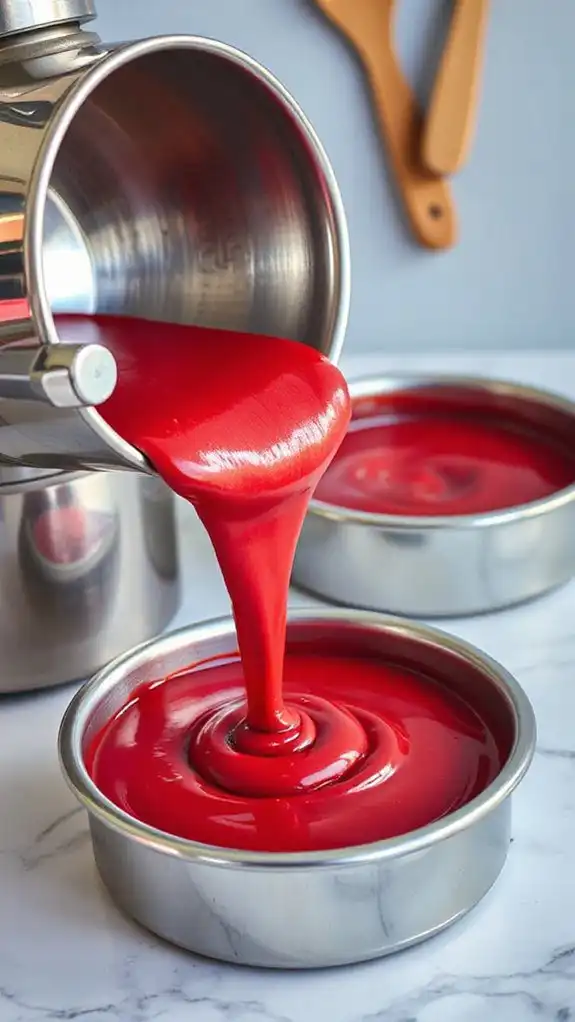
Once the batter achieves its vivid red tone, bakers carefully pour it into greased pans, ensuring an even distribution that promotes uniform baking and a flawless rise.
Artistic pouring techniques, such as gentle swirling, minimize texture variations, fostering a consistent crumb structure.
This precise method enhances the cake’s tender interior, preventing uneven spots for optimal results.
4. Prepare Cream Cheese Frosting
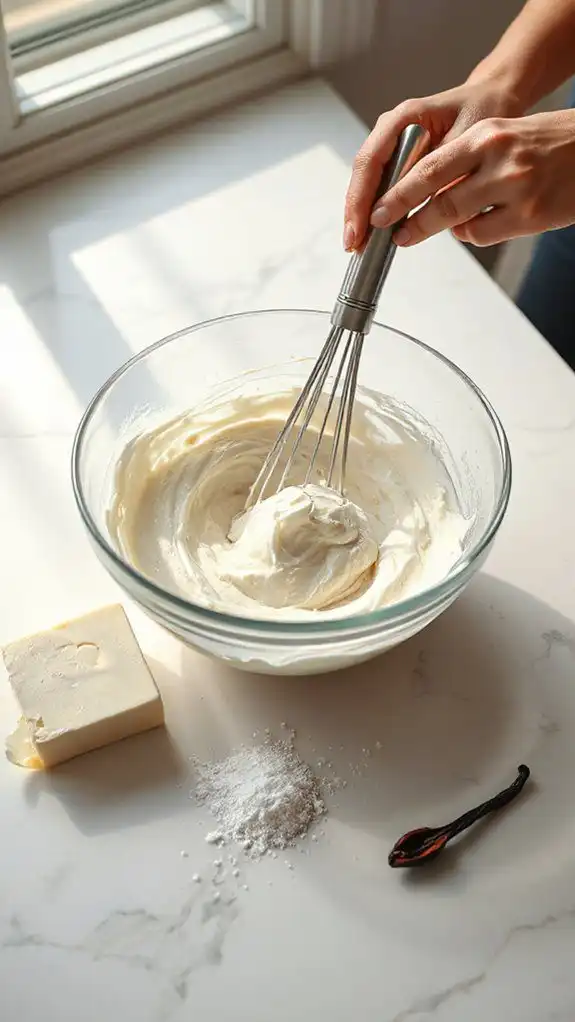
Artisans blend cream cheese with softened butter to form a velvety base for the frosting.
They then whisk in sifted powdered sugar and vanilla extract, crafting a luscious, tangy glaze.
For alternative ingredients, consider Greek yogurt or vegan cream cheese substitutes to vary texture.
Freezing methods involve sealing portions in airtight bags, allowing thawing in the refrigerator to retain that perfect, creamy consistency.
5. Bake for 25 Minutes
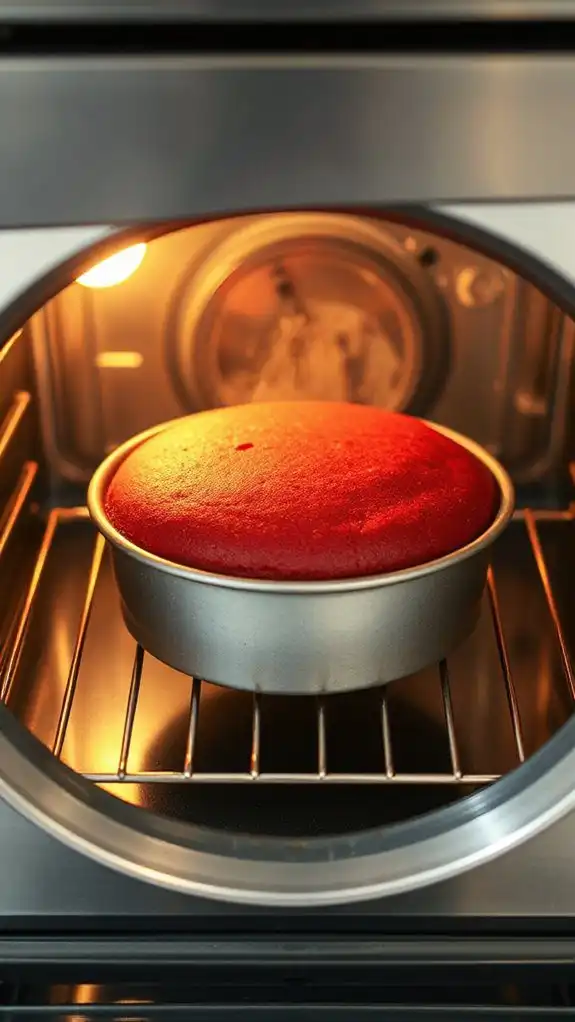
The cake batter, now smoothed into prepared pans, enters a preheated oven set to 350°F, where precise heat drives the chemical reactions for 25 minutes.
The specified Oven Duration ensures even rising and vibrant color, while Timer Adjustment for accuracy adapts to oven variations, preventing overbaking and promoting a tender crumb, allowing flavors to develop harmoniously within the controlled heat.
6. Cool Cakes Completely
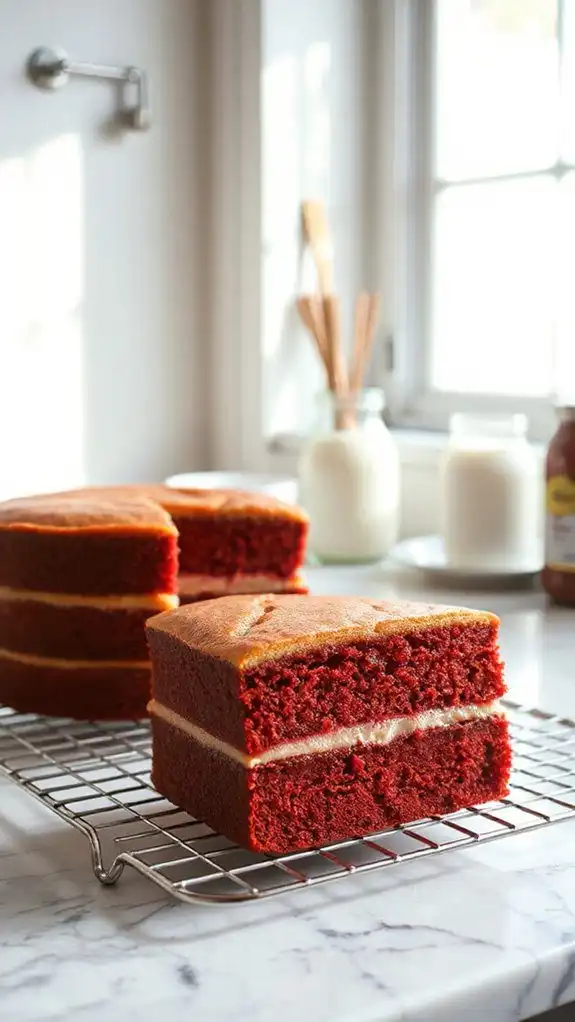
After baking concludes, the cakes exit the oven, their internal heat dissipating gradually on wire racks to prevent structural collapse and preserve moisture.
Addressing Cooling Myths, like the belief that rapid chilling enhances texture, Thermal Effects demand slow cooling to avoid cracking and sogginess.
This precise process ensures even thermal distribution, maintaining a tender crumb without compromising integrity.
7. Frost Cooled Layers
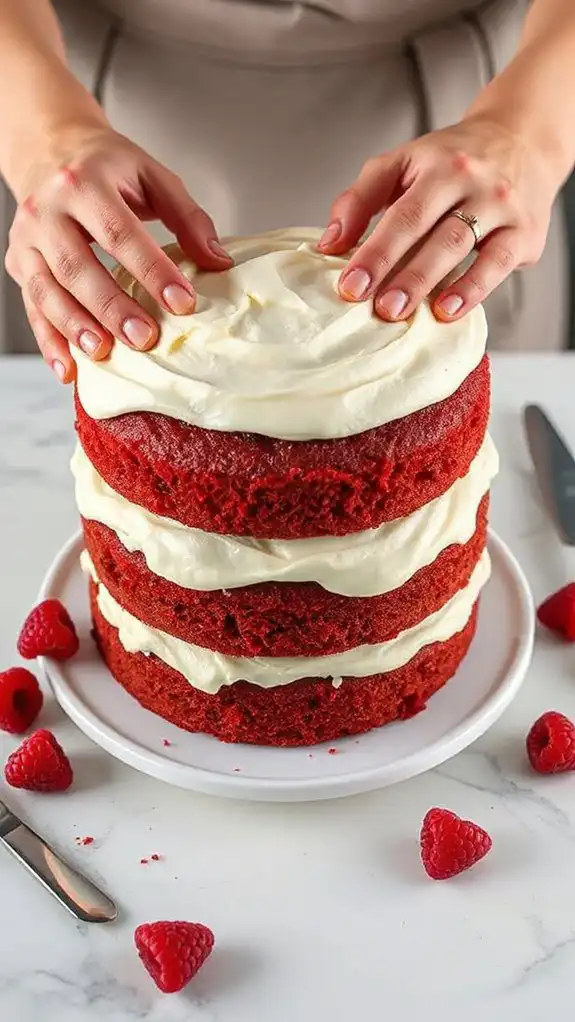
With cooled layers ready, frosting commences by selecting a smooth, complementary icing—often cream cheese for red velvet—to achieve seamless adhesion and visual appeal.
Advanced Frosting Techniques, such as crumb coating and even spreading, prevent crumbs from marring the surface.
Layer Artistry transforms stacking into a precise ballet, balancing flavors and textures for a flawlessly integrated, decadent red velvet tower that captivates the senses.
Serving and Pairing Suggestions
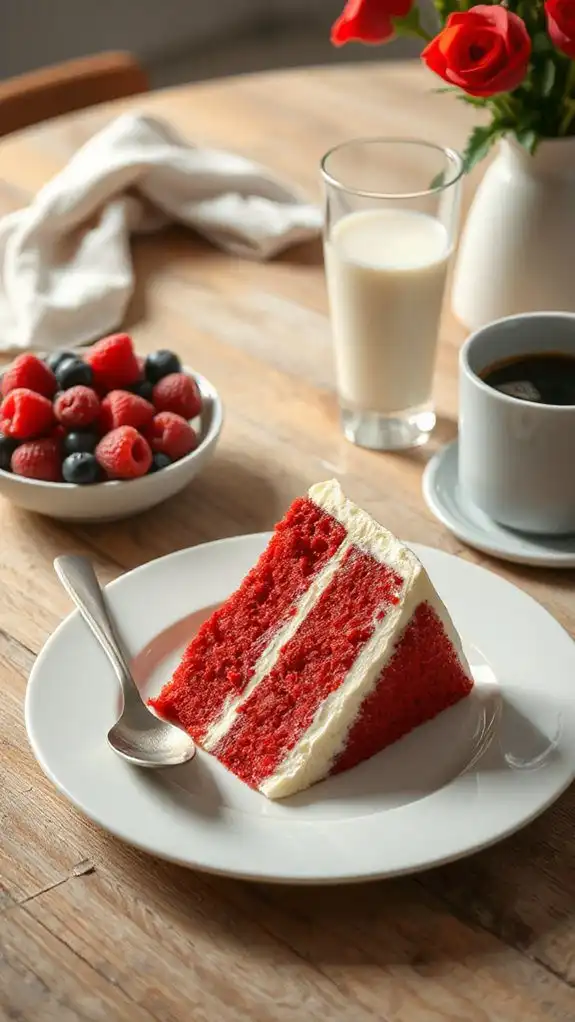
Presentation elevates the frosted red velvet cake by focusing on optimal slicing techniques that reveal its moist layers and creamy texture.
Effective serving techniques and pairing options enhance enjoyment.
- Employ a serrated knife for clean, precise cuts that unveil the cake’s velvety interior without crumbling.
- Pair with aromatic coffee to balance the cake’s sweetness with bold, earthy undertones.
- Serve on minimalist platters with strategic garnishes, highlighting the vivid red hue and creaminess.
- Explore fruit pairings like raspberries for a tangy contrast that refreshes the palate.
Tips and Variations
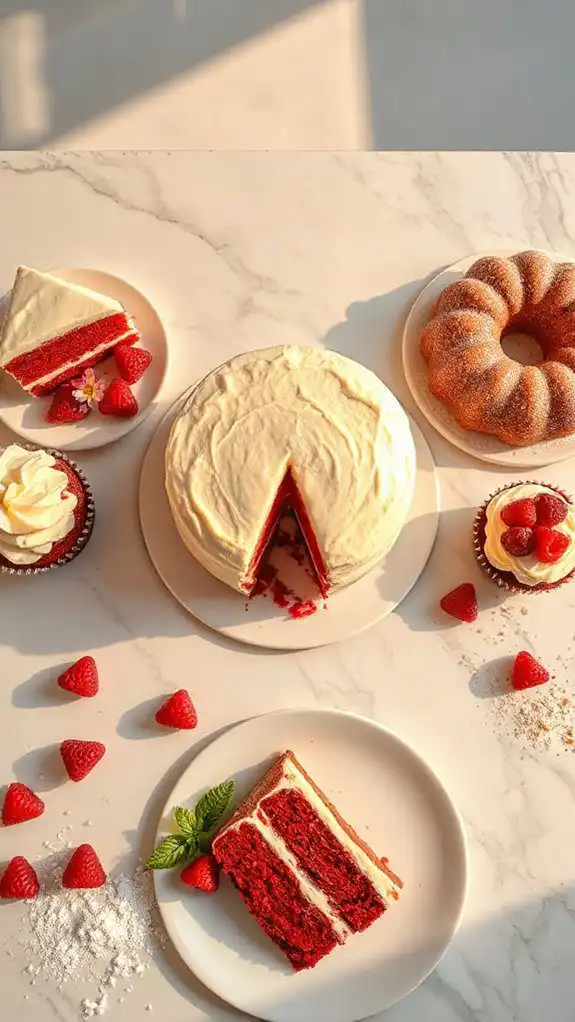
Red velvet cake offers endless opportunities for customization, with practical tips and inventive variations that refine its preparation and adapt it to diverse tastes.
Bakers can employ Baking Tricks for impeccable results, while Flavor Infusions introduce exciting nuances to the iconic recipe.
- Master Baking Tricks: Gently fold batter to prevent overmixing, ensuring a tender, airy crumb without density issues.
- Explore Flavor Infusions: Infuse with citrus zest or spices like cinnamon for a vibrant, layered taste profile.
- Enhance Moisture Variations: Adjust liquid ratios for a supremely moist texture, balancing richness subtly.
- Incorporate Dietary Twists: Swap ingredients for gluten-free options, maintaining the cake’s signature allure creatively.
Kitchen Tools
Selecting the right kitchen tools elevates red velvet cake preparation, building on tips and variations by ensuring accurate measurements and consistent results through items like precise scales and sturdy mixing bowls. Emphasizing Tool Cleaning—such as wiping scales post-use—prevents residue buildup, while Storage Tips like keeping bowls in ventilated cabinets maintain durability and precision.
| Kitchen Tool | Maintenance Tip |
|---|---|
| Precise Scales | Tool Cleaning: Wipe gently. |
| Sturdy Mixing Bowls | Storage Tips: Stack safely. |
| Measuring Cups | Tool Cleaning: Soak promptly |
| Whisk | Storage Tips: Hang upright. |
| Spatula | Tool Cleaning: Wash by hand. |
Essential Equipment
Essential equipment forms the foundation for achieving impeccable results in red velvet cake baking, encompassing specialized items that ensure efficiency and precision beyond basic tools.
Equipment history reveals enduring innovations.
- Stand mixers, pivotal in innovation trends for uniform batter blending.
- Digital scales, evolved from historical balances for exact measurements.
- Convection ovens, advancing baking through modern equipment history techniques.
- Silicone molds, reflecting innovation trends in non-stick durability.
Nutritional Information (Estimated, per serving)
Nutritional values for a serving of red velvet cake reveal a profile rich in calories and fats, with estimates derived from typical recipes that include flour, sugar, and buttermilk. This Calorie Comparison underscores its tempting indulgence, while Allergen Warnings highlight potential risks like dairy and wheat sensitivities. The table below evokes a blend of desire and caution:
| Nutrient | Estimated Amount | Emotional Insight |
|---|---|---|
| Calories | 350 kcal | A siren call of decadence |
| Total Fats | 18g | Creamy, heart-melting lure |
| Sugars | 25g | Sweet, blissful temptation |
| Allergens | Dairy, Wheat | A gentle nudge of prudence |
Explore Velvet Variations
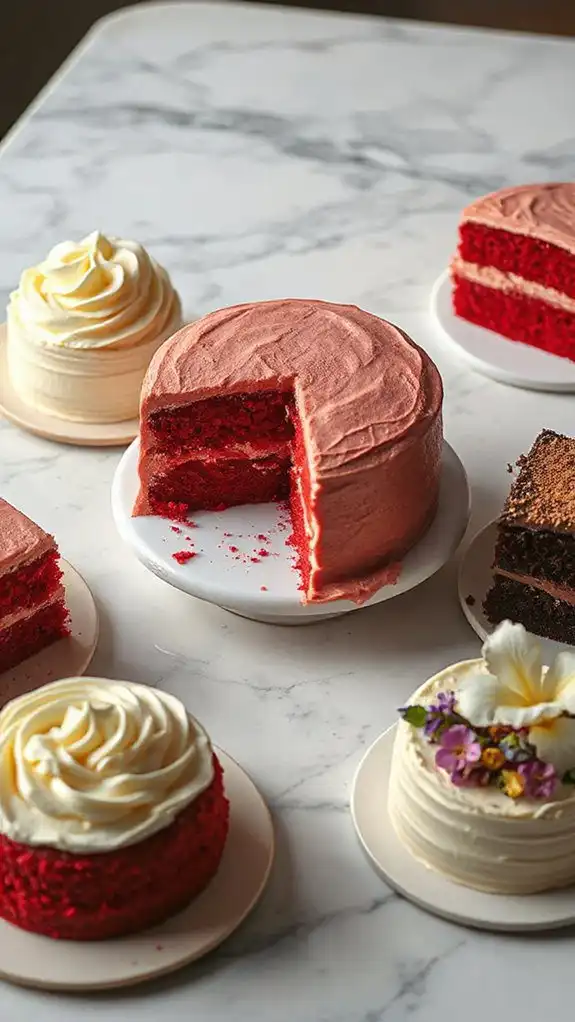
How do velvet cakes transcend their red archetype?
Velvet cakes evolve through innovative adaptations, embracing exotic flavors and modern twists to captivate palates beyond tradition.
- Exotic Flavors Infusion: Integrate matcha or chai spices for an adventurous, earthy depth.
- Modern Twists on Texture: Experiment with gluten-free bases for lighter, contemporary appeal.
- Colorful Variations: Swap red dye for natural hues like beetroot, enhancing visual allure.
- Fusion Elements: Blend in global ingredients, such as pistachio or yuzu, for surprising profiles.
Troubleshooting
Even as bakers master the basics of red velvet cake, common pitfalls like uneven crumb or fading color can disrupt the final product, necessitating targeted solutions to restore its signature allure.
Addressing safety precautions, such as wearing gloves when handling dyes to avoid skin irritation, and implementing allergy fixes like using nut-free butters, can mitigate risks and enhance accessibility for all bakers.
Conclusion
In conclusion, mastering red velvet cake demands a harmonious blend of precise techniques and creative ingenuity, transforming simple ingredients into a visually striking and flavorful masterpiece.
Final Thoughts emphasize the balance of science and art, while Author Insights reveal that experimentation fosters personal flair, ensuring enduring appeal and satisfaction in every decadent slice.