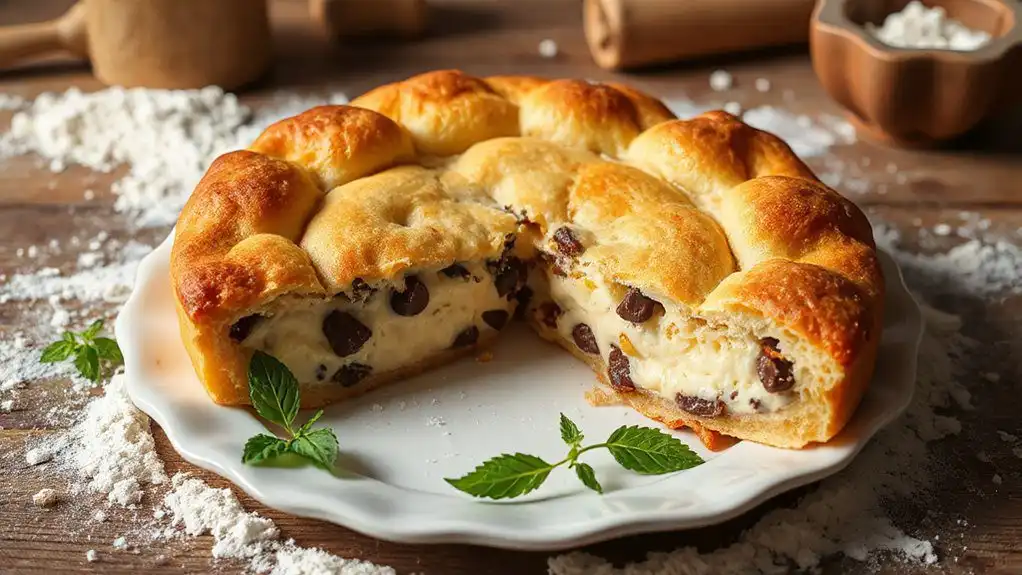
Origin in Italian Tradition
The origins of Italian ricotta pie are deeply rooted in the culinary traditions of Italy, reflecting a rich history of regional ingredients and celebrations.
This delightful dessert showcases the diverse Italian heritage, as each region infuses its own unique flavors and techniques into the recipe.
In southern Italy, for example, citrus zest and chocolate may be incorporated, while northern variations might emphasize the sweetness of local honey or the richness of cream.
The use of fresh ricotta embodies the seasonal produce characteristic of rural Italian kitchens, symbolizing the care of family farms.
As time has passed, these regional variations have become emblematic of local festivities, preserving ancestral recipes and ensuring that the art of ricotta pie continues to thrive within Italian culture.
Family Gatherings and Holidays
Italian ricotta pie not only celebrates regional flavors but also serves as a centerpiece during family gatherings and holidays. For generations, families gather around tables adorned with this delicious dish, its flaky crust beckoning to be shared among loved ones.
As one of the quintessential holiday recipes, it evokes cherished family traditions, recalling memories created over shared meals. The preparation process is often a collective effort, with family members contributing their unique touch, whether in mixing the ricotta filling or rolling the dough.
This pie is not just a dessert; it embodies warmth, connection, and the joy of togetherness. When served, it offers an inviting flavor that transforms ordinary occasions into extraordinary celebrations steeped in cultural heritage.
Essential Ingredients
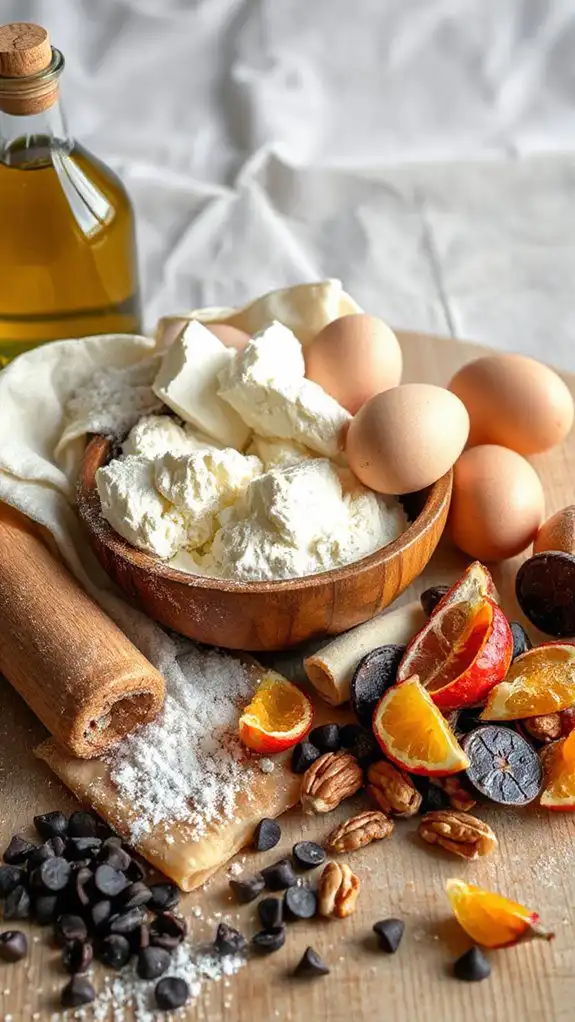
At the heart of a delightful Italian ricotta pie lies a carefully curated selection of essential ingredients, each playing a vital role in creating its signature flavor and texture.
The creamy ricotta cheese serves as the star, offering a rich and smooth base that harmonizes with sugar and eggs, adding sweetness and structure. Olive oil introduces a subtle fruitiness, enhancing the pie’s overall flavor profile while maintaining moisture.
Complementing this is a flaky crust, which can vary from traditional pastry to modern gluten-free options, providing texture that perfectly contrasts the creamy filling.
Additionally, favorite fillings such as chocolate chips, candied citrus, or even nuts can elevate the pie, allowing for delightful personalization that captivates the senses.
Cooking Steps
While preparing to create a scrumptious ricotta pie, one must begin by gathering all necessary ingredients and tools to ensure a seamless cooking experience.
The first cooking technique involves making a flaky crust from flour, salt, and olive oil, which can be substituted with butter for a richer flavor. Once the crust is prepared, it should be allowed to rest before rolling it out.
Next, the filling—a delightful blend of ricotta cheese, sugar, eggs, and vanilla—is mixed until smooth, with the option to incorporate lemon zest for added brightness.
After assembling the pie by layering the filling into the crust, it’s crucial to ensure an even distribution for consistent baking.
These essential steps lay the groundwork for a heavenly dessert.
1. Preheat the Oven to 350°F
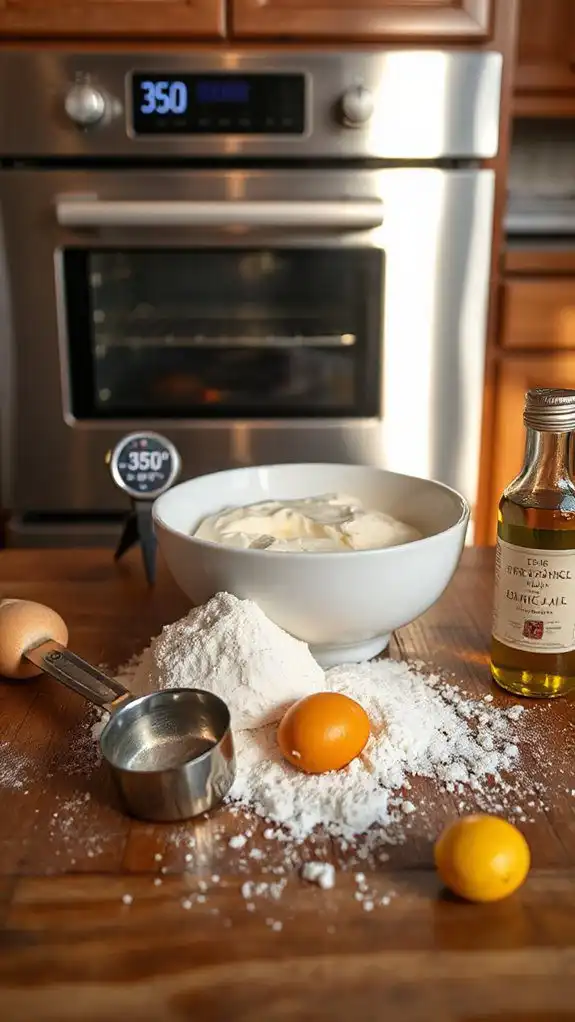
An essential step in the preparation of a delicious ricotta pie is preheating the oven to 350°F. This temperature is ideal for ensuring that the pie crust achieves a golden, flaky texture while the ricotta filling sets perfectly.
Preheating the oven not only optimizes cooking time but also helps prevent uneven baking, a key consideration in traditional Italian recipes that have been passed down through generations.
For many families, preparing a ricotta pie is an integral part of their Easter traditions, symbolizing renewal and celebration.
As the oven warms, the aroma of the ingredients begins to mingle, creating anticipation for the flavorful dessert that is synonymous with joyous gatherings and cherished moments shared around the table during the festive season.
2. Mix Ricotta and Sugar
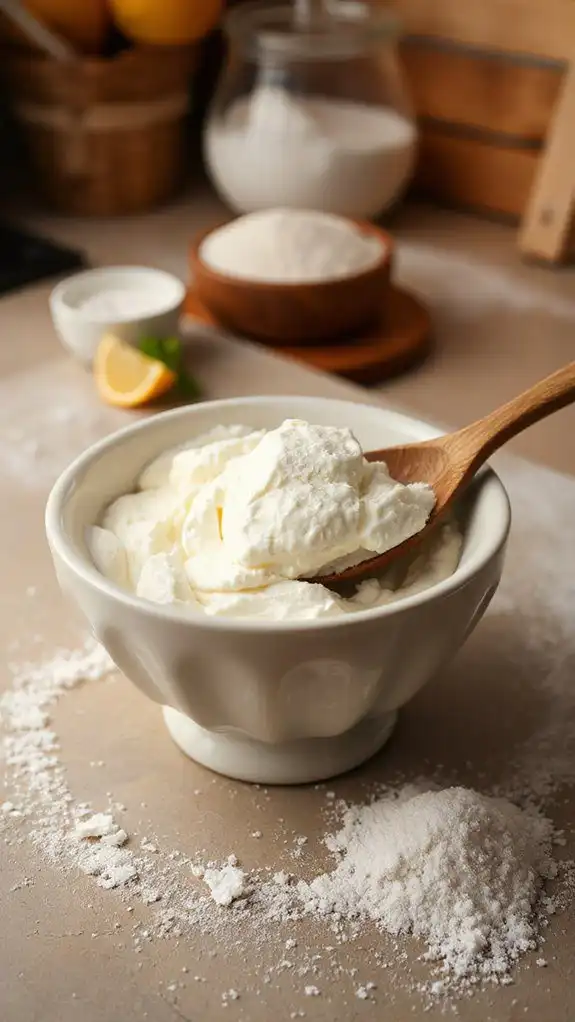
With the oven now preheated to a steady 350°F, the next step in crafting the Italian ricotta pie involves thoroughly mixing the ricotta cheese and sugar. This crucial stage requires careful attention to achieve the perfect sweetness balance that defines the pie’s rich flavor.
Employing effective mixing techniques, one can use a manual hand mixer or a sturdy whisk to blend the ingredients smoothly. The goal is to create a creamy mixture where the sugar is fully dissolved, ensuring an even sweetness throughout the pie.
It is essential to avoid overmixing, as this can introduce excess air into the filling, potentially affecting the final texture. Once completed, this mixture paves the way for the harmonious addition of other flavors in the next steps.
3. Blend Eggs and Flavorings

Next, the process of blending the eggs and flavorings begins, adding depth and character to the ricotta pie. The eggs, a crucial component, are cracked into a mixing bowl, their golden yolks glistening with potential.
Incorporating aromatic ingredients such as vanilla extract or citrus zest, the baker employs various blending techniques, creating a harmonious mixture that will enhance the pie’s overall flavor profile. As the eggs blend with the flavorings, a velvety texture emerges, working in tandem to elevate the pie’s sweetness and richness.
This step not only binds the ingredients but also infuses the filling with delightful egg flavors, promising a delectable experience. The careful attention to this stage ensures the ricotta pie is not only satisfying but also memorable.
4. Incorporate Flour and Butter
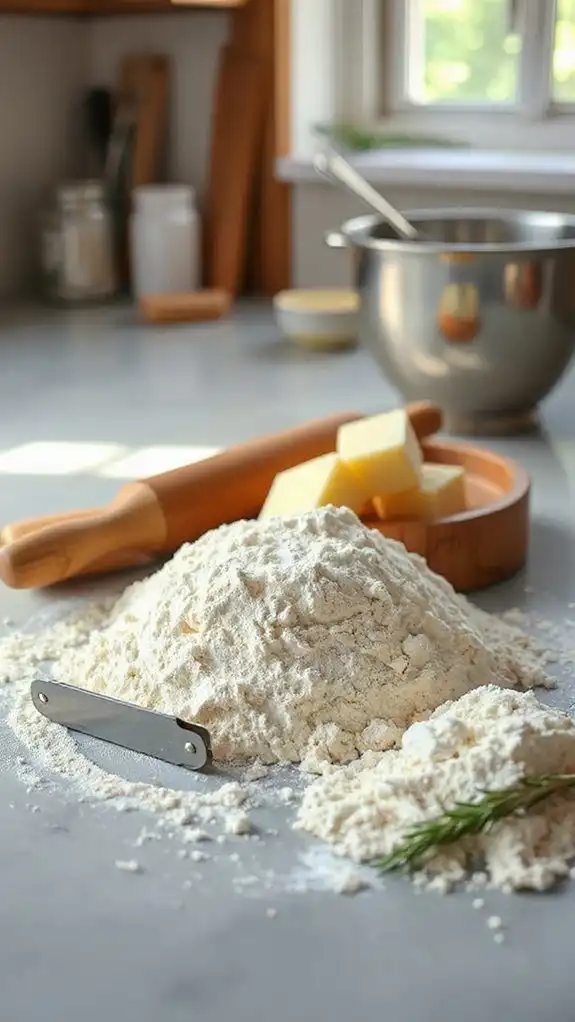
The mixture of blended eggs and flavorings now creates a rich foundation ready to embrace the addition of flour and butter.
A careful flour selection is essential, as all-purpose flour often provides a balanced texture.
This key ingredient, combined with the right butter types, such as unsalted for better control of saltiness, forms the buttery, flaky crust that defines the pie’s allure.
As the flour is gradually incorporated, it melds with the melted butter, creating a cohesive dough that promises to deliver both flavor and tenderness.
The richness of the butter and the delicate nature of the flour intertwine, crafting a pie crust that will cradle the luscious ricotta filling, ensuring each bite is a delightful experience of tradition and taste.
5. Chill Dough Before Rolling
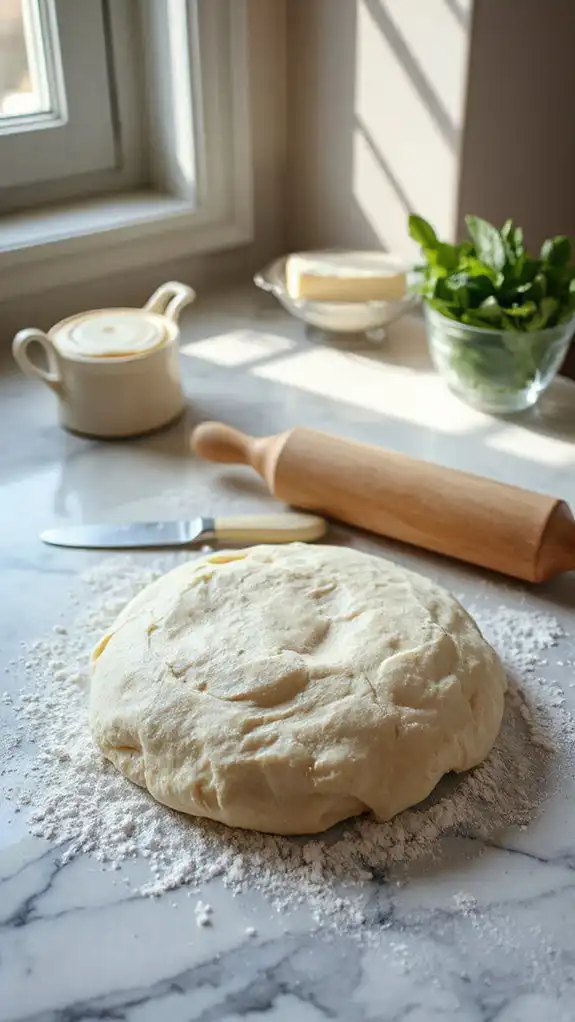
Chilling the dough before rolling is a crucial step that enhances both texture and ease of handling.
This brief chill time allows the fats within the dough to solidify, resulting in a firmer consistency that prevents sticking and tearing during rolling.
As the dough cools, its gluten also relaxes, promoting a tender, flaky crust ideal for the Italian Ricotta Pie.
The chill time not only improves the dough texture but also makes it more manageable, reducing the risk of overworking and developing too much gluten, which can lead to a tough result.
Therefore, committing to this simple yet effective practice ensures that the final pie is light and airy, capturing the essence of traditional Italian baking.
6. Bake for 45 Minutes
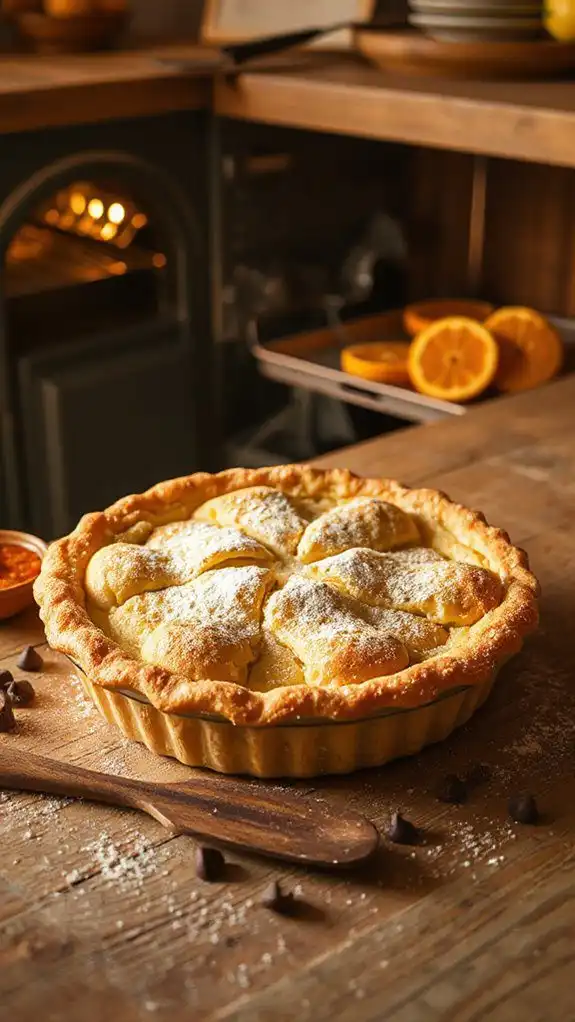
After the dough has been chilled and rolled out, it reaches the pivotal moment in the baking process: baking for 45 minutes. This stage is crucial for achieving a crispy, flaky crust while ensuring the filling sets perfectly.
The oven’s heat transforms the dough, creating a golden-brown exterior that encases the rich ricotta mixture. Employing proper baking techniques, including preheating the oven and positioning the pie on the middle rack, is essential for even cooking.
For those looking to experiment, ingredient substitutions such as using low-fat ricotta or alternative sweeteners can adjust the pie’s flavor and nutrition profile.
7. Serving With Sweet Wines

While enjoying a slice of Italian ricotta pie, the experience is often elevated with a carefully selected sweet wine that complements its creamy richness.
The delicate flavors of the pie harmonize beautifully with a range of wine varieties, enhancing each bite. A well-chilled Moscato d’Asti, with its light fizz and floral notes, serves as an ideal companion, while a late harvest Riesling introduces luscious fruitiness that perfectly mirrors the pie’s sweetness.
Additionally, Vin Santo offers a rich, nutty profile, making a delightful contrast to the pie’s creamy filling.
These sweet pairings not only enhance the dessert’s flavors but also create a memorable tasting experience, inviting indulgence and celebration during festive occasions.
Serving and Pairing Suggestions
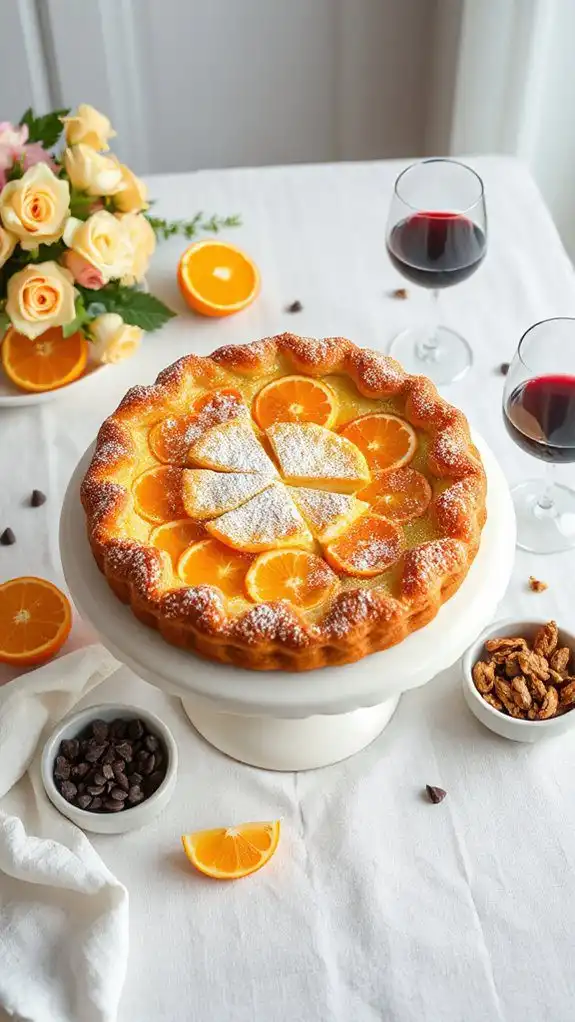
To truly appreciate the rich, creamy texture of Italian ricotta pie, presentation and pairing play crucial roles in enhancing the overall dining experience.
Thoughtful serving suggestions and pairing ideas can elevate its distinct flavors.
- Fresh Berries: Serve alongside a medley of mixed berries such as strawberries, raspberries, and blueberries to add a pop of color and freshness.
- Whipped Cream: A dollop of lightly sweetened whipped cream can contrast beautifully with the pie’s richness.
- Espresso: Pair with a shot of dark, robust espresso; its bittersweet notes complement the sweetness of the pie perfectly.
These elements not only enhance the dessert’s aesthetic appeal but also create a delightful balance that transforms each bite into a memorable experience.
Tips and Variations
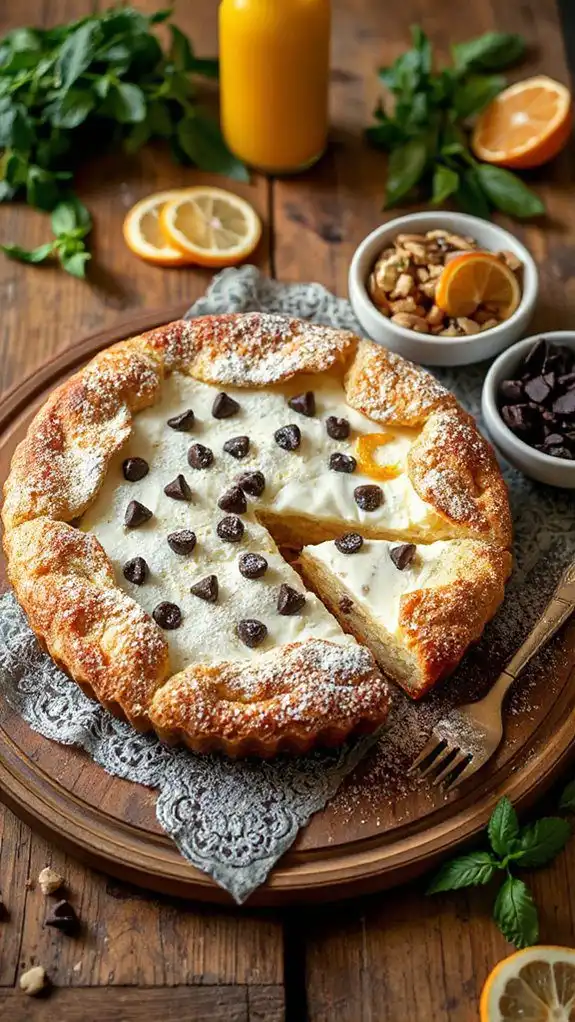
Serving and pairing suggestions can significantly enhance the enjoyment of Italian ricotta pie, but experimenting with tips and variations further enriches its charm.
Here are three engaging options for recipe adaptations and flavor variations:
- Fruit Infusions: Incorporate fresh citrus zest or pureed seasonal fruits such as berries or peaches into the ricotta filling to elevate flavor profiles.
- Nutty Touch: Add finely chopped nuts like almonds or pistachios to the crust or filling, providing a delightful crunch and added richness.
- Herb Enhancements: For a savory twist, blend in fresh herbs such as basil or mint, creating a unique contrast to the traditional sweet notes.
These variations invite creativity and make the ricotta pie a delightful treat for any occasion.
Kitchen Tools
The successful creation of an Italian ricotta pie relies on a few essential kitchen tools that streamline the process and ensure an impeccable result. Using the right baking tools can elevate the pie’s texture and flavor while minimizing stress.
| Kitchen Gadget | Purpose | Recommended Usage |
|---|---|---|
| Mixing Bowl | Combine ricotta and fillings | Use a large bowl |
| Rolling Pin | Roll out the flaky crust | Maintain even thickness |
| Pie Dish | Provide structure and shape | Use a deep dish |
| Pastry Cutter | Cut and shape crust edges | Ensure decorative edge |
| Rubber Spatula | Scrape down sides and fold ingredients | Incorporate evenly |
Utilizing these tools, bakers can focus on perfecting their delicious Italian ricotta pie.
Essential Equipment
Essential equipment plays a crucial role in the art of crafting an authentic Italian ricotta pie, transforming a simple recipe into a remarkable dessert.
Utilizing the right equipment types ensures a perfect crust and a delightful filling. Here are three essential tools every cook should have:
- Food Processor: For effortlessly blending ingredients, achieving a smooth ricotta filling, and creating the flaky crust.
- 9-inch Pie Plate: A must-have for shaping and baking the pie, providing the ideal depth for a generous filling.
- Rolling Pin: Essential for rolling out the dough evenly, ensuring the perfect thickness for an aesthetic and tasty crust.
Having these essential tools on hand guarantees a successful baking experience and a delectable Italian ricotta pie.
Nutritional Information (Estimated, per serving)
Understanding the nutritional profile of an Italian ricotta pie enhances appreciation for this delightful dessert. Each serving, typically around 1/8 of a pie, provides a balance of flavors and essential nutrients. The nutritional benefits include protein from ricotta, carbohydrates from the crust, and healthy fats. Below is an estimated breakdown per serving:
| Nutrient | Amount |
|---|---|
| Calories | 300 |
| Protein | 10g |
| Carbohydrates | 35g |
| Fat | 15g |
This dessert, while indulgent, remains a relatively moderate option when enjoyed in appropriate serving sizes, allowing for a mindful approach to dessert without significant compromising on dietary balance.
Related Italian Desserts to Try
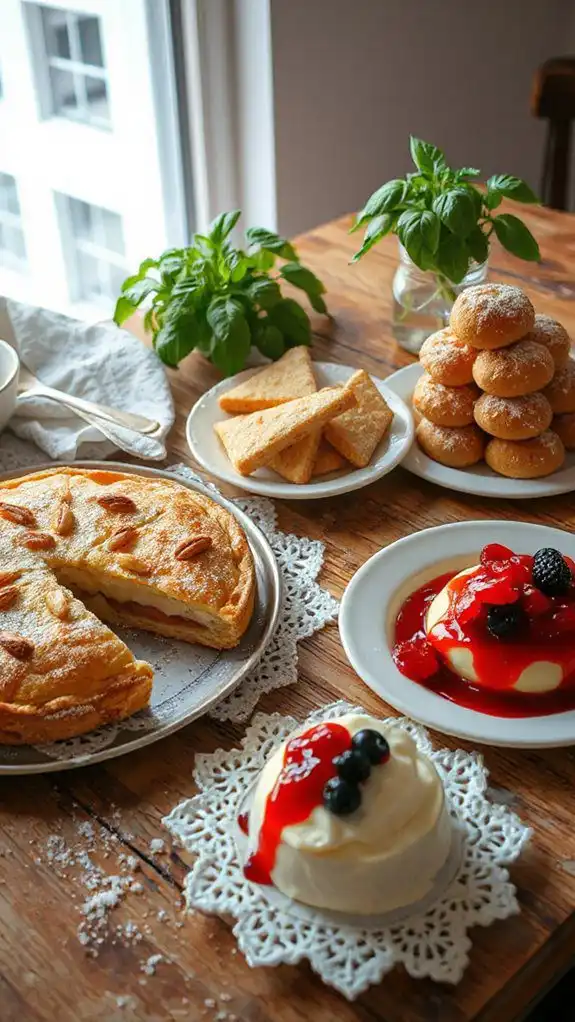
What could be more delightful than exploring the rich array of Italian desserts that complement the creamy, textured delight of ricotta pie? Each dessert brings its own unique flavor and character, making them perfect companions for ricotta pie.
- Tiramisu Variations: Experience different layers of indulgence with this classic coffee-flavored dessert, which can be adapted with various ingredients, such as fruit or flavored liqueurs.
- Panettone Recipes: This festive Italian sweet bread, often filled with candied fruits and nuts, offers a delightful contrast to the creaminess of ricotta pie.
- Panna Cotta: A smooth, silky Italian cream dessert usually flavored with vanilla, providing a light and refreshing finish to any meal.
These additional treats truly celebrate the artistry of Italian desserts.
Troubleshooting
While indulging in the enticing flavors of Italian desserts, one might encounter challenges when preparing the beloved ricotta pie. A common issue is an overbaked crust, which can result in a dry, hard texture instead of the desired flaky finish.
To prevent this, bakers should monitor the pie closely during the final stages of baking, ensuring it is just golden brown.
Another concern lies in the filling consistency. If the ricotta mixture is too runny, it may lead to a soggy pie, while a filling that is too thick can result in an unappetizing dryness.
To achieve the ideal consistency, proper blending of ingredients is crucial, and it’s advisable to strain the ricotta ahead of time to eliminate excess moisture.
Conclusion
The delightful Italian ricotta pie embodies a rich tradition of Italian pastry making, offering a unique blend of flavors and textures that can enchant any dessert lover.
Often reserved for Easter celebrations, this dessert stands as a testament to the enduring customs surrounding Italian Easter traditions.
With its flaky crust and creamy ricotta filling, the pie is both a visual and culinary delight that symbolizes joy and abundance during the festive season.
Moreover, it serves as a bridge connecting generations, inviting families to gather and share stories as they indulge in these beloved Italian desserts.
In this way, the ricotta pie not only satisfies the palate but also creates lasting memories, reinforcing cultural bonds during one of Italy’s most cherished holidays.