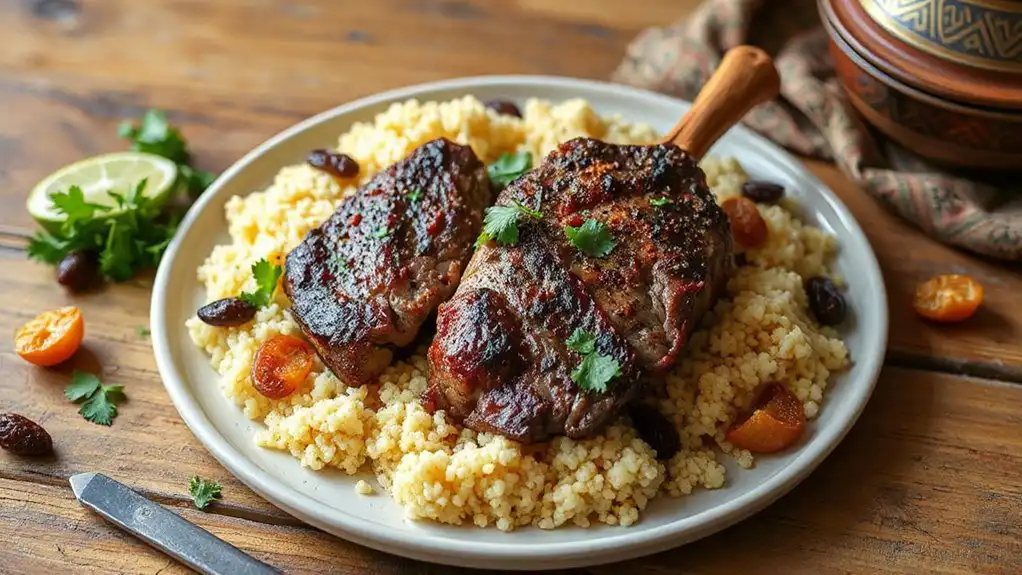
Moroccan Culinary Traditions
Moroccan culinary traditions are a vibrant tapestry woven from centuries of cultural exchanges, showcasing the country’s rich history and diverse influences.
At the heart of these traditions lies a skillful use of spice combinations, elevating dishes to a sensory experience. Spices such as cumin, coriander, and saffron blend harmoniously, reflecting the artistry of Moroccan cooks.
The culinary landscape is heavily shaped by Berber, Arab, and Mediterranean cultures, each contributing unique techniques and flavors. Meals often feature tagines, couscous, and aromatic stews, presenting an array of textures and aromas.
Celebratory occasions and communal dining further highlight the importance of food as a cultural connector, allowing families and friends to gather and share in the joy of Moroccan hospitality.
Food Enthusiasts and Adventurers
Food enthusiasts and adventurers are continually drawn to the vibrant culinary landscape of Morocco, where the rich tapestry of traditions inspires exploration and creativity in cooking.
With its origins tied to ancient pastoral cultures, lamb is a staple that highlights the region’s flavorful heritage. The allure of Moroccan spices—cumin, coriander, and cinnamon—invites chefs to experiment with daring flavor pairings, creating dishes that tantalize the senses.
Culinary techniques, such as slow-cooking in tagines, allow the meat to absorb rich seasonings, enhancing its succulent texture. Adventurous cooks are tempted to blend these elements, crafting aromatic meals that transport diners to the bustling souks of Marrakech.
Each dish becomes a narrative, connecting food lovers with Morocco’s vibrant essence.
Essential Ingredients
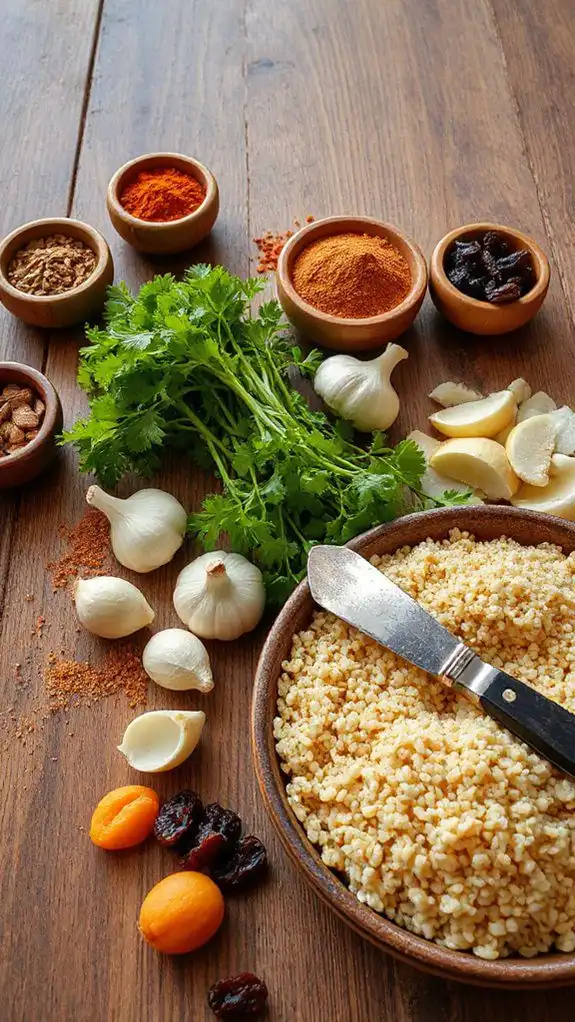
A vibrant array of essential ingredients forms the foundation of an aromatic Easter Moroccan lamb backstrap dish. Central to this culinary experience are rich spice blends, such as cumin, coriander, and cinnamon, which infuse the lamb with a depth of flavor that transports the diner to the markets of Marrakech.
Fresh herbs like cilantro and parsley add brightness, while garlic and onion introduce an aromatic warmth. Accompanying the lamb, fluffy couscous serves as a perfect canvas for the dish’s flavorful profiles, absorbing the succulent juices and spices.
Dried fruits, such as apricots or raisins, lend a subtle sweetness, harmonizing beautifully with the savory components. Together, these ingredients create a seductive symphony that captivates the senses and evokes the spirit of celebration.
Cooking Steps
Sizzling lamb backstrap, marinated in aromatic spices, sets the stage for a culinary adventure in the kitchen.
First, a hot skillet or grill is essential for searing the lamb; this technique locks in moisture while creating a beautiful, caramelized crust. The lamb should be cooked for about 3 to 4 minutes on each side, ensuring a perfect medium-rare temperature.
Meanwhile, fluffy couscous awaits its turn. Boiling water infused with Moroccan spices enhances the grains’ flavor, while a fork fluffs them to perfection.
Serving the sliced lamb atop the couscous creates a delightful contrast of textures and tastes. The final touch can be fresh herbs or a drizzle of tangy sauce, elevating the dish further into the realm of culinary excellence.
1. Marinate Lamb Overnight
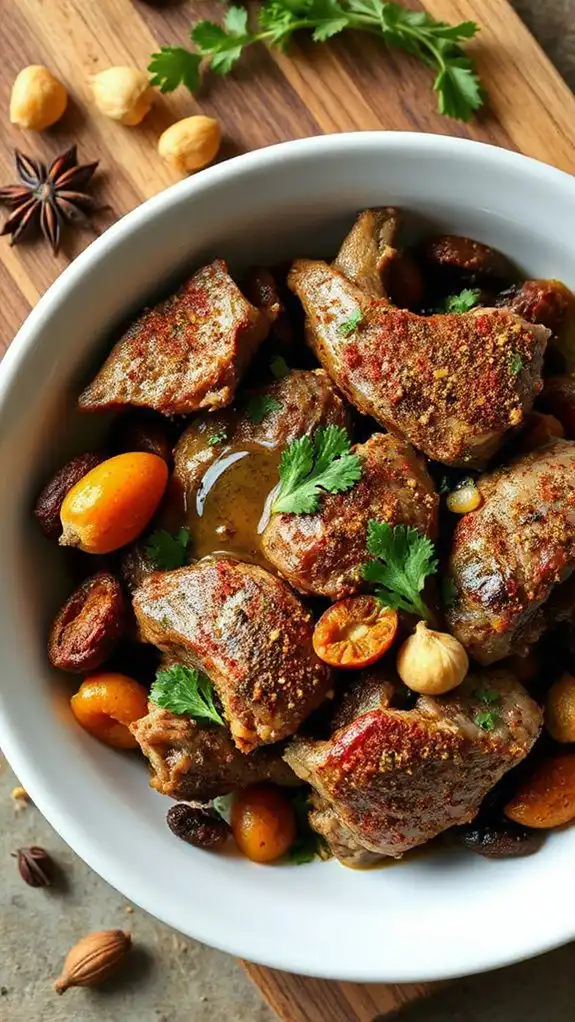
To achieve a rich depth of flavor, marinating the lamb overnight is essential. This process allows the marinade flavors to deeply penetrate the meat, transforming the lamb into a tender, aromatic delicacy.
The combination of spices, herbs, and oils in the marinade not only enhances the taste but also ensures moisture retention during cooking.
One of the overnight benefits lies in the extended time for the lamb to absorb the spices, resulting in a beautifully infused profile that the palate will savor.
As the lamb rests in the marinade, the acids work to break down proteins, contributing to a fork-tender texture. The result is a dish that captivates with its complexity, making every bite a memorable experience.
2. Sear Lamb on High Heat
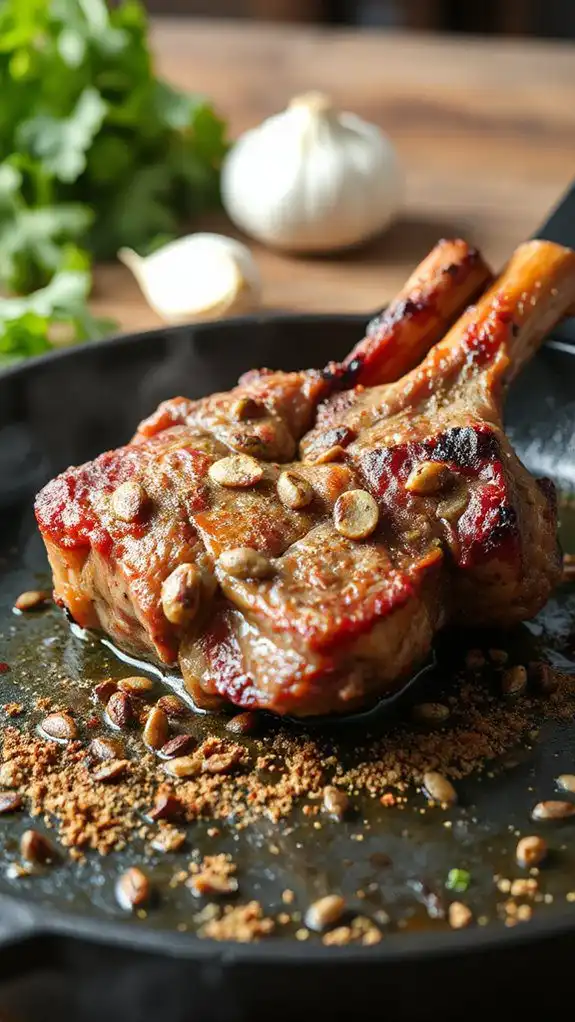
After the lamb has marinated overnight, the next step involves searing it on high heat to develop a rich, flavorful crust.
Utilizing high heat benefits the cooking process by ensuring a rapid surface reaction that leads to exquisite meat caramelization. As the lamb makes contact with the blistering skillet, the Maillard reaction unfolds, transforming its exterior into a golden-brown texture that locks in juices and enhances overall flavor.
This initial sear not only creates visual appeal but also heightens the aromatic experience, as the spices from the marinade meld harmoniously with the natural flavors of the lamb. Achieving this perfect balance requires careful attention, ensuring that the meat is seared quickly without overcooking, setting the stage for an unforgettable main dish.
3. Rest Lamb Before Slicing
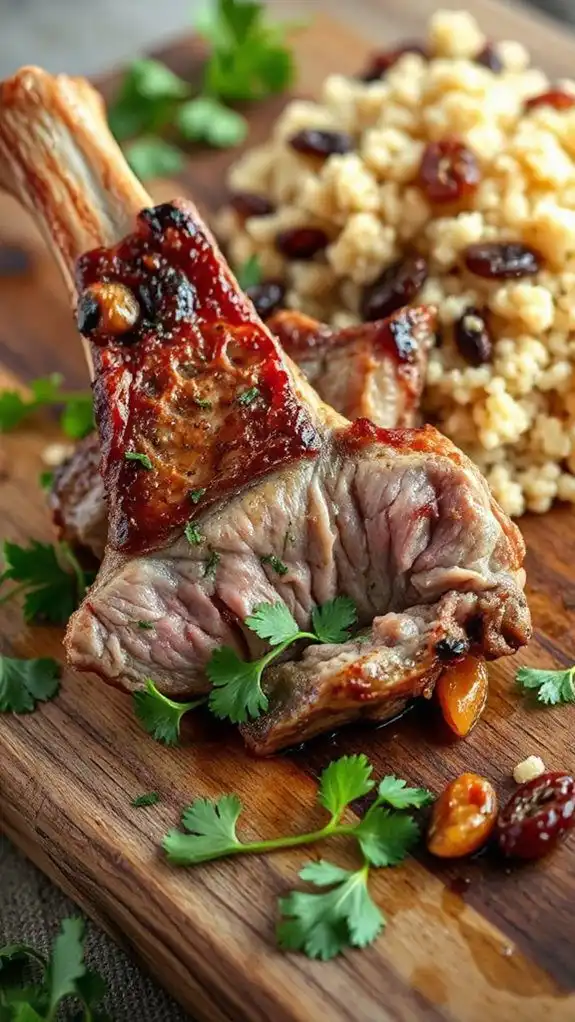
While the temptation to slice into the beautifully seared lamb may be strong, allowing it to rest before serving is crucial for achieving optimal flavor and texture.
Resting the lamb, typically for about 10 to 15 minutes, allows the juices that have been driven to the center to redistribute throughout the meat. This process enhances moistness and flavor. Effective resting techniques can involve tenting the lamb with foil to retain warmth while preventing moisture loss.
Once rested, employing precise slicing methods, such as cutting against the grain, ensures each piece remains tender and succulent. By respecting this vital step, one can elevate the overall dining experience, showcasing the lamb’s rich, aromatic profile while promising satisfaction with every bite.
4. Bake Lamb in Oven
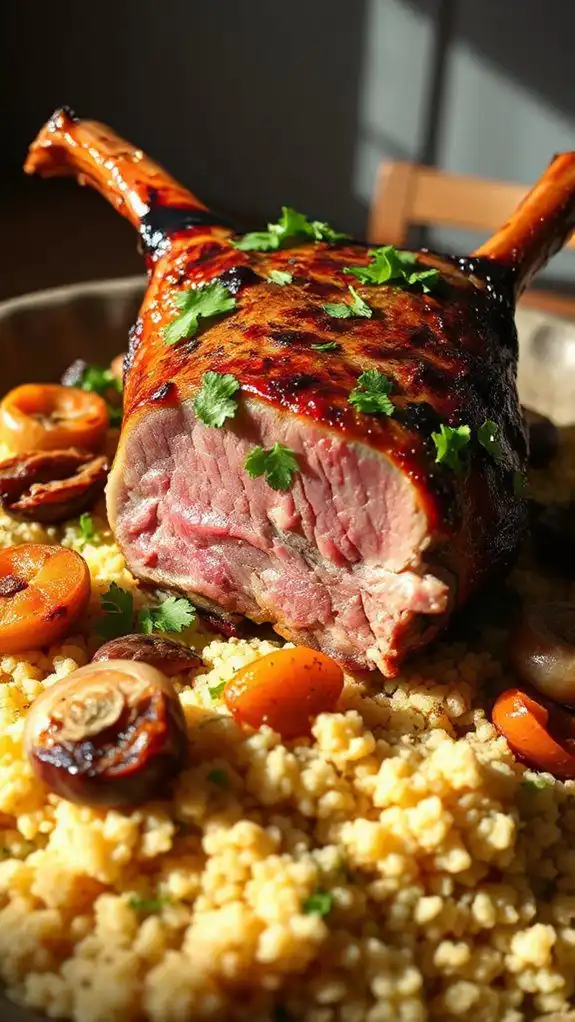
Once the lamb has been allowed to rest, the next step in preparing this aromatic dish involves baking it in the oven.
Utilizing effective baking techniques, the chef preheats the oven to a moderate temperature, typically around 180°C (350°F). This setting ensures even cooking, allowing the lamb to absorb the rich Moroccan spices while retaining its natural juices.
The lamb backstrap is then placed in a roasting dish, possibly with a splash of broth or wine to enhance moisture. Basting occasionally during baking ensures a succulent outcome, while a meat thermometer can help monitor doneness, targeting an internal temperature around 60°C (140°F) for medium-rare.
Through careful attention to oven settings and method, a flavorful masterpiece emerges.
5. Slice Lamb Against the Grain
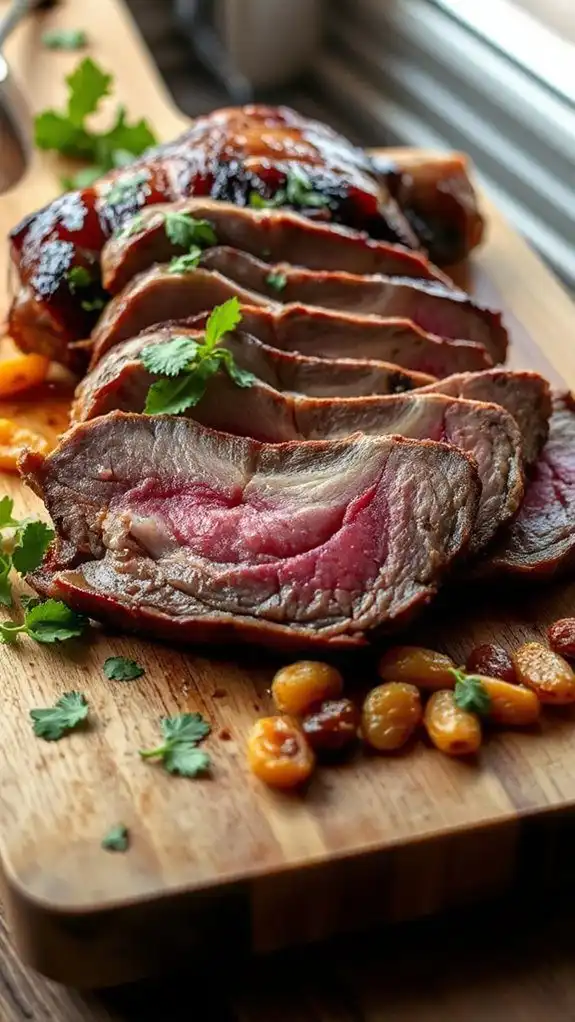
To achieve the perfect texture and tenderness for the lamb, it is essential to slice against the grain. This slicing technique involves identifying the direction of the muscle fibers and cutting perpendicular to them, which shortens those fibers. By doing so, the meat becomes more tender and easier to chew, enhancing the overall dining experience.
When slicing the succulent lamb backstrap, using a sharp knife ensures clean cuts that maintain the beautiful presentation. Each slice should be uniform in thickness, allowing for even cooking and absorption of flavors.
Mastering this slicing technique transforms the lamb into a melt-in-your-mouth delicacy, highlighting its rich flavors while maximizing meat tenderness. Attention to detail in this step is vital for a memorable culinary creation.
6. Baste With Herb Mixture
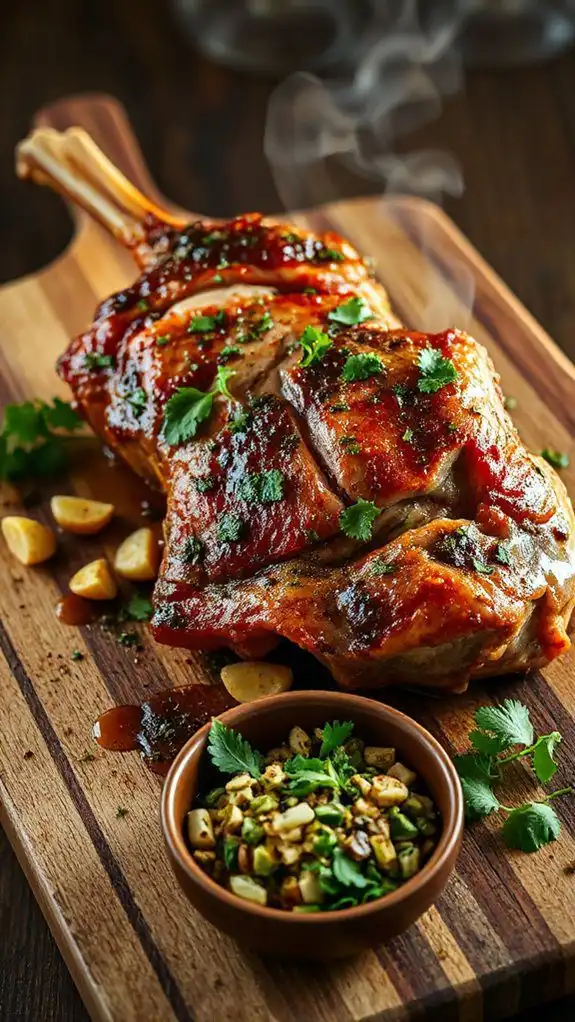
Gently coating the lamb backstrap with a fragrant herb mixture elevates its flavor profile and infuses the meat with aromatic nuances.
Employing effective basting techniques, the cook can ensure that each side of the meat is evenly covered, allowing the herb blends to penetrate deeply. A mix of fresh rosemary, thyme, and savory can be combined with olive oil and garlic to create an invigorating marinade.
As the backstrap cooks, the basting technique not only adds moisture but also enhances the caramelization process, resulting in a beautifully browned exterior.
Regularly applying the herb mixture during cooking will deepen the flavor while contributing to a stunning presentation. This step is essential for achieving a succulent and aromatic dish that delights the palate.
7. Plating With Fresh Herbs
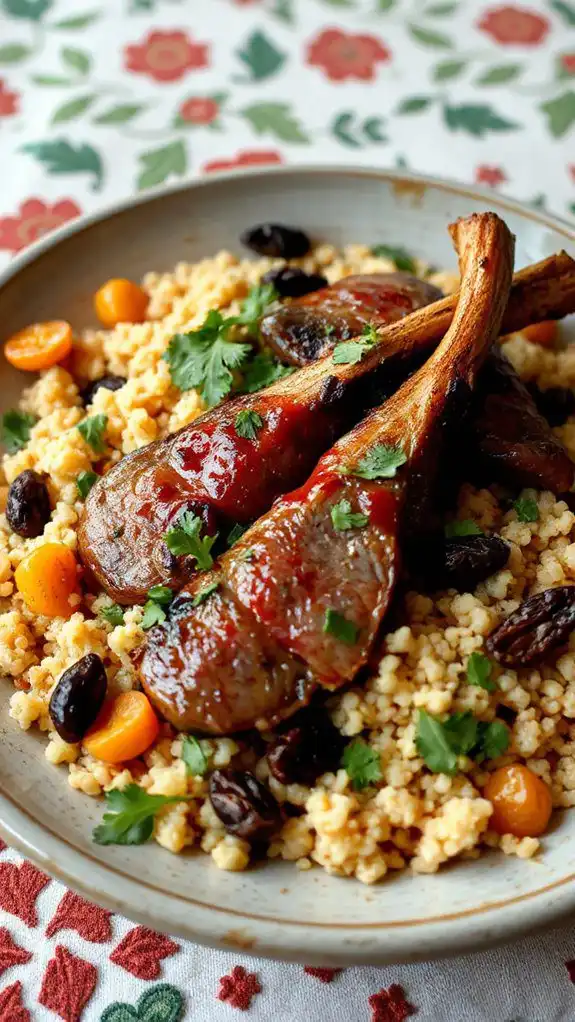
Enhancing visual appeal, the careful arrangement of fresh herbs can transform a plate of Moroccan lamb backstrap into an enticing masterpiece.
The art of herb selection plays a crucial role; vibrant mint, fresh cilantro, or a sprinkle of dill can elevate the dish’s overall aesthetic. Utilizing simple garnish techniques, such as delicate tossing of herbs or creating small herb sprigs, allows for a charming finish.
A strategic placement beneath the meat or alongside the couscous can provide contrast, while also hinting at the dish’s aromatic flavors. Thoughtfully layered, these fresh herbs add not only color but also an inviting aroma that invites diners to savor every bite.
The thoughtful incorporation of herbs ensures each plate is a feast for the eyes and palate.
Serving and Pairing Suggestions
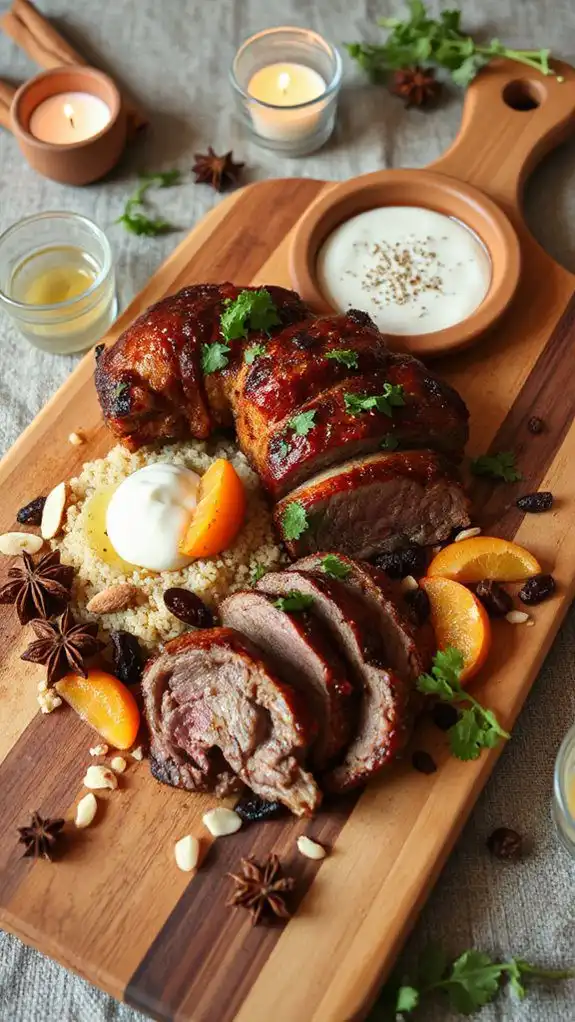
What makes a meal truly memorable? The experience is heightened through thoughtful food presentation and perfect beverage pairing.
For the Aromatic Easter Moroccan Lamb Backstrap with Couscous, serving suggestions emphasize both aesthetics and taste.
- Vibrant Vegetables: Accompany the dish with a colorful medley of roasted seasonal vegetables, enhancing visual appeal.
- Herb-Infused Oil: Drizzle a herb-infused olive oil over the lamb for an aromatic enhancement that captivates the senses.
- Citrus Acidity: Offer a refreshing citrus salad on the side to balance the rich flavors of the lamb.
For beverage pairing, consider a full-bodied red wine or a fragrant Moroccan mint tea, both elevating the dining experience while harmonizing with the dish’s spices.
Tips and Variations
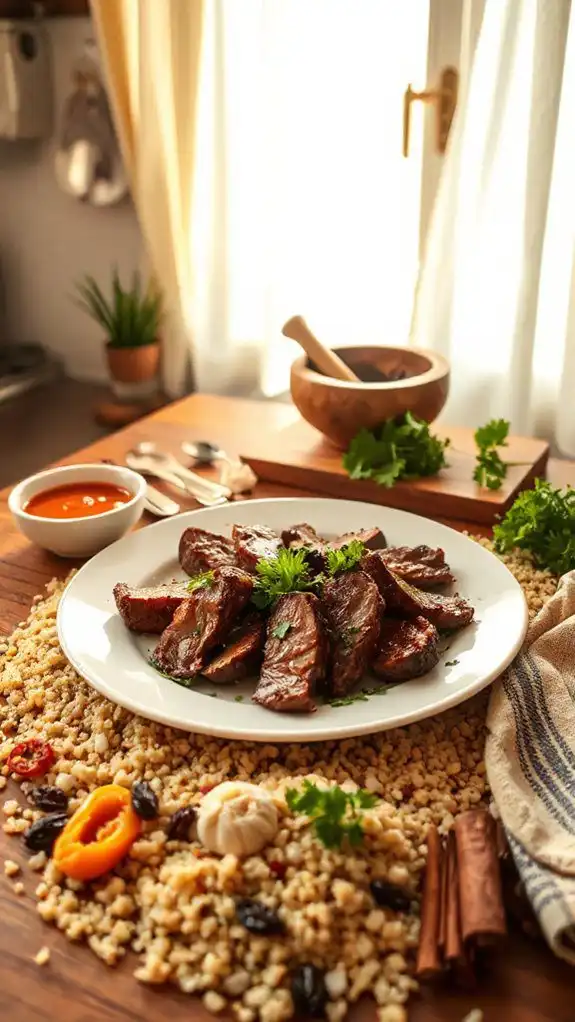
Exploring variations and tips for the Aromatic Easter Moroccan Lamb Backstrap with Couscous can elevate this dish to new culinary heights.
A few thoughtful adjustments can enhance flavors and presentation.
- Experiment with Lamb Seasoning: Explore different spice blends, such as za’atar or harissa, for an exciting twist on traditional seasoning.
- Couscous Cooking Techniques: Consider toasting couscous in olive oil before adding broth for a nuttier flavor, or try a whole grain variety for added texture and nutrition.
- Adding Fresh Herbs: Garnish the dish with chopped parsley or mint for a vibrant finish that complements the rich flavors of the lamb.
These variations not only add depth but also provide a unique personal touch to this festive dish.
Kitchen Tools
When preparing the Aromatic Easter Moroccan Lamb Backstrap with Couscous, having the right kitchen tools at one’s disposal can significantly streamline the cooking process and enhance the overall experience. Essential kitchen tools aid in mastering various cooking techniques, ensuring precision in each step.
| Kitchen Essential | Purpose | Recommended Use |
|---|---|---|
| Sharp Chef’s Knife | For precise meat cutting | Slicing the lamb backstrap neatly |
| Measuring Cups & Spoons | Accurate ingredient portions | Measuring spices and couscous |
| Large Mixing Bowl | For combining ingredients | Mixing the marinade and couscous |
Equipping oneself with these essentials not only improves efficiency but also elevates the quality of the final dish, allowing for a truly delightful culinary creation.
Essential Equipment
In addition to having the right kitchen tools, specific equipment is vital for successfully preparing the Aromatic Easter Moroccan Lamb Backstrap with Couscous.
This dish relies on precise cooking techniques to enhance the rich flavor profiles of the lamb and the delicate couscous, making the right equipment essential.
- Heavy-bottomed Dutch oven: Perfect for searing lamb and slow-cooking with aromatic spices.
- Meat thermometer: Ensures the lamb is cooked to the perfect doneness for maximum tenderness.
- Couscous steamer: Facilitates the perfect fluffy texture, allowing the grains to absorb all the delicious flavors.
Each tool serves a unique purpose, contributing to the overall success of this delectable dish and elevating the dining experience.
Nutritional Information (Estimated, per serving)
Nutritional information for the Aromatic Easter Moroccan Lamb Backstrap with Couscous reveals a balanced combination of protein, carbohydrates, and essential nutrients that supports a wholesome dining experience. Each serving offers notable nutritional benefits, making it an appealing choice for those seeking a delicious yet health-conscious dish.
| Nutrient | Amount per Serving |
|---|---|
| Protein | 30g |
| Carbohydrates | 40g |
| Fat | 15g |
These values, based on typical serving sizes, highlight the dish’s rich protein content, ideal for muscle maintenance and energy. The carbohydrates from couscous provide a satisfying base, while essential fats ensure a well-rounded meal. Together, they contribute to an enjoyable and fulfilling dining experience.
Explore Couscous Variations
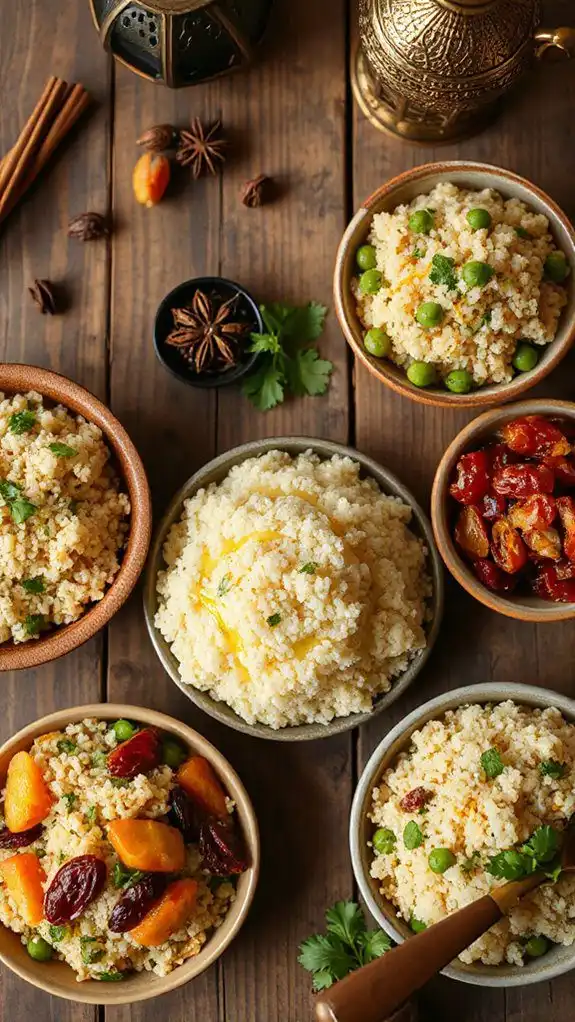
Couscous, a versatile staple of North African cuisine, offers a delightful canvas for various culinary interpretations. Its fluffy texture and ability to absorb an array of couscous flavors make it a perfect complement to an array of dishes, particularly aromatic lamb backstrap.
Cooked to perfection, couscous can be elevated with unique toppings that engage the palate.
- Mediterranean Bliss: Incorporating olives, sun-dried tomatoes, and feta cheese for a tangy twist.
- Herb-Infused Delight: A mix of fresh herbs like mint, parsley, and cilantro enhances the couscous experience.
- Spiced Nut Medley: Toasted almonds, pistachios, or pine nuts add depth with both crunch and warmth.
Such variations in couscous toppings transform a simple side into a memorable meal.
Troubleshooting
When cooking couscous to accompany the aromatic lamb backstrap, careful attention to technique can make all the difference in achieving the desired texture and flavor.
If couscous turns out too dry or clumpy, it may require a more generous amount of liquid and gentle stirring to ensure even absorption. Conversely, overly wet couscous can result from excess water, necessitating a light fluffing with a fork.
Lamb tenderness is crucial; undercooking may lead to chewiness, while overcooking risks a dry texture. To strike a seasoning balance, taste periodically, adjusting spices and salt, ensuring the robust flavors complement rather than overpower one another.
With mindful adjustments, one can achieve a harmonious dish that highlights each component beautifully.
Conclusion
While crafting an aromatic Easter Moroccan lamb backstrap with couscous, the culmination of flavors and textures plays a pivotal role in delivering a memorable dining experience.
The rich, succulent lamb, marinated and infused with a symphony of Moroccan spices, creates an enchanting centerpiece for festive gatherings. The fluffy couscous, adorned with a medley of vibrant vegetables and herbs, serves as the perfect accompaniment, enhancing the meal’s overall appeal.
Each bite invites diners into a world where culinary traditions meet contemporary flavors, reflecting the essence of Moroccan cuisine. As families and friends come together to share this dish, the harmonious blend of spices not only tantalizes the palate but also fosters a sense of connection and celebration during Easter festivities.